Building Institutional Capacity: MEL and Communications Training for Impact
"The PESPA Consortium strengthened its organizational foundations through intensive training in Monitoring, Evaluation & Learning (MEL) and strategic communications—essential infrastructure for accountable, adaptive food systems work."
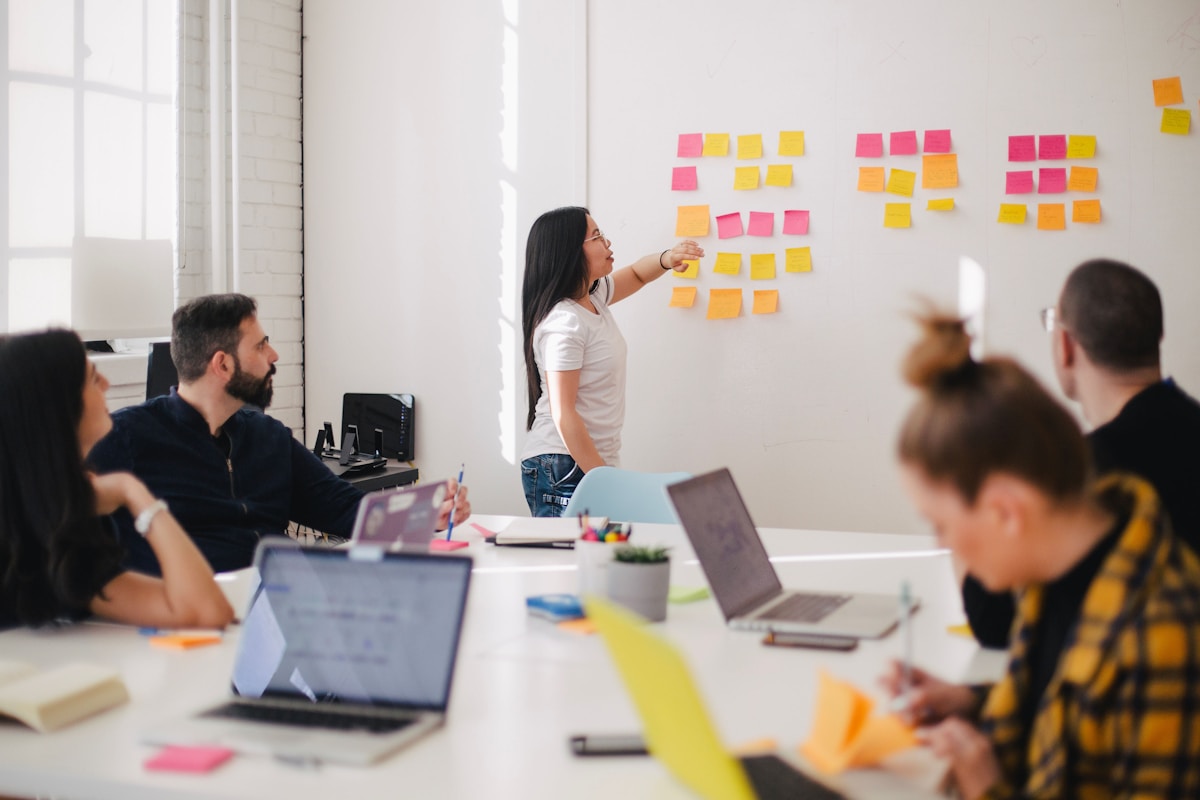
Bandung, March-April 2024 — Before launching community-facing programs, the PESPA Consortium invested in something less visible but equally critical: organizational capacity for learning, adaptation, and communication. Through a series of trainings in Monitoring, Evaluation & Learning (MEL) and strategic communications run under the Urban Futures programme, with communications sessions delivered by Humanis, consortium partners built the infrastructure to document impact, improve practice, and share knowledge.
This behind-the-scenes work—often overlooked in program narratives—proved essential to PESPA's success. Without robust MEL systems, how would the consortium know if Food Sovereignty Campaign participants actually changed behavior? Without communications strategy, how would journalists discover the Food Journalism Training? The March-April 2024 capacity building sessions answered these questions.
Why MEL Matters for Food Sovereignty Work
Traditional monitoring and evaluation often misses the nuanced changes that food sovereignty work catalyzes. Conventional metrics—tons of food produced, number of training participants—don't capture shifted power dynamics, strengthened social capital, or changed consciousness.
The Urban Futures MEL training introduced consortium partners to participatory approaches designed for complexity. Over two intensive days on March 19-20, 2024, partners explored:
Outcome Harvesting: Instead of pre-defining outcomes, this method collects evidence of change after the fact, allowing unexpected results to surface. PESPA later used it to survey participants of the Food System Diplomacy School and the Food Journalism Training in August 2025.
Most Significant Change (MSC): This storytelling-based method collects narratives of change from participants and stakeholders, using systematic selection processes to identify which changes matter most.
Photovoice Methodology: Participants document their realities through photography, then analyze images collectively to identify themes and inform action. This method centers community knowledge and creates accessible data for advocacy.
The training emphasized that MEL isn't just accountability for donors—it's a learning system for continuous improvement.
Finance Training: Transparency and Accountability
The January 25, 2024 finance introduction session, the Urban Futures finance kick-off run by Humanis, addressed a common challenge for grassroots organizations: managing funds with accountability while minimizing bureaucratic burden.
Partners learned finance systems including budget tracking, expense documentation, and narrative budget reporting. The emphasis was on transparency—clear money trails that build trust among consortium members and with funders.
For many community-based partners, this was professionalization without bureaucratization. The systems were rigorous but designed to support program work, not overwhelm it with paperwork.
The session also covered resourceful finance management: How do you allocate limited budgets across competing priorities? How do you build reserves for unexpected needs? How do you demonstrate financial responsibility to unlock future funding?
These pragmatic skills enabled PESPA to maximize impact per rupiah spent—critical for organizations working in resource-constrained contexts.
Communications Strategy: Amplifying Food Sovereignty Voices
The communications training helped partners move from ad hoc social media posts to strategic communications aligned with program goals. Using the 2024 work plan and tracker monitoring tools, partners mapped:
Target Audiences: Who needs to hear about PESPA's work? Policymakers for advocacy impact, media for public awareness, community members for recruitment, donors for sustainability, peer organizations for knowledge exchange.
Key Messages: What do different audiences need to know? For policymakers: evidence of community-led food sovereignty solutions. For media: compelling human stories illustrating systemic issues. For communities: accessible information about participation opportunities.
Communications Channels: Where do target audiences get information? Traditional media for older policymakers, social media for youth, community radio for marginalized neighborhoods, academic journals for researchers.
Monitoring and Adjustment: How do you know if communications are working? Website analytics, media monitoring, audience feedback surveys, and qualitative observations of how messages are received and used.
The tracker systems enabled real-time monitoring. Partners logged communications activities—press releases, social media posts, community presentations—and tracked outcomes like media coverage, social media engagement, and inquiries from potential participants.
This systematic approach transformed communications from afterthought to strategic function. The result: 20 journalists signed up for Food Journalism Training based on targeted outreach, and the Food Sovereignty Campaign recruited 50 participants meeting diversity targets.
Youth Perspectives and Participatory Approaches
The April 2024 "E2A: Youth Perspective and Participatory Approach" session brought insights from Urban Futures projects in West Manggarai and Bandung. Facilitated under E2A (Evidence to Action), a Fondation Botnar learning initiative, the session addressed a critical question: How do you meaningfully engage youth in food systems work, not just as beneficiaries but as co-designers and decision-makers?
Youth participants from previous Urban Futures projects shared their experiences:
"Adults assume youth don't have relevant knowledge, so we're not included in planning meetings. But we live the food system every day—we know what works and what doesn't in our communities."
"Participatory doesn't just mean asking youth for input. It means sharing power over decisions, budgets, and timelines."
The session introduced tools for authentic youth engagement: participatory budgeting where youth allocate funds, youth-led research where young people design questions and collect data, intergenerational dialogue structured to balance power between youth and elder participants.
These principles shaped PESPA's design. The FOODS training didn't just teach youth about food systems—it positioned them as experts whose knowledge matters. The Food Sovereignty Campaign didn't ask marginalized communities what they needed and then deliver services—it built their capacity to demand and create solutions themselves.
MEL Resource Library: Eleven Frameworks
The MEL training included a comprehensive resource library with eleven participatory monitoring and evaluation frameworks:
- Outcome Harvesting brief (Wilson-Grau, revised November 2013)
- Monitoring without indicators: the Most Significant Change approach
- Lessons learned from the use of the Most Significant Change technique
- Photovoice: a methodological guide
- Evaluating participatory evaluation
- Accountability and learning
- ILAC Brief 7 on mapping
- Apgar and Allen, chapter in the SAGE Handbook
- Apgar et al. (2024), rethinking rigour to embrace complexity in peacebuilding evaluation
- The difference learning makes: factors that enable and inhibit adaptive programming
- Monitoring and evaluation in health and social development
The breadth of tools reflected a MEL philosophy: different questions require different methods, and participatory approaches generate more useful knowledge than external expert-driven evaluation.
Application: MEL and Communications in Practice
How did these capacity-building investments manifest in PESPA's work?
Outcome Harvesting in Action: In August 2025 PESPA used Outcome Harvesting to ask FOODS participants what had changed for them; eleven responded, describing changes such as more mindful consumption and small discussions on food systems with peers.
Communications Tracker Results: By monitoring communications outputs and reach, PESPA identified that Instagram stories generated more youth engagement than Facebook posts, leading to platform prioritization. Traditional press releases reached policymakers more effectively than social media, informing advocacy communications strategy.
Youth Participatory Design: The Food Sovereignty Campaign Workshop agendas were co-designed with youth participants from pilot sessions. Their input shaped activity timing, format preferences, and content emphasis.
Finance Transparency: Clear budget tracking enabled PESPA to present funders with detailed expenditure reports showing efficient resource use, strengthening the case for future funding.
Theory of Change Application: The Urban Futures Theory of Change workshop helped PESPA map connections between individual mindset shifts (from FOODS training), community organizing (Food Sovereignty Campaign), and policy change goals (accessibility regulations for markets). This systems view prevented siloed program thinking.
Building Learning Organizations
The March-April MEL and communications training wasn't a one-time capacity injection—it initiated PESPA partners into a culture of learning organizations. Key practices adopted:
Regular Reflection Sessions: Facilitators for the Food Sovereignty Campaign held debrief meetings after each workshop, using the MEL framework to assess what worked, what didn't, and what to adapt.
Participant Feedback Loops: Every training and workshop included structured feedback mechanisms—written surveys, verbal check-ins, anonymous suggestion boxes—ensuring participant voices shaped program evolution.
Documentation Discipline: Partners committed to systematic documentation—meeting minutes, photo archives with metadata, participant contact lists, budget tracking—creating an evidence base for learning and accountability.
Communications Coordination: Biweekly communications calls aligned messaging across partners, preventing contradictory public statements and leveraging each organization's communications channels.
These practices transformed PESPA from a project with MEL requirements into a learning network continuously improving based on evidence.
Challenges and Ongoing Capacity Needs
Despite strong MEL and communications foundations, challenges persisted. Data analysis proved time-consuming, with partners balancing program delivery and documentation demands. Some participatory methods required expertise partners were still developing.
Communications reach remained limited despite strategic efforts. How do you engage busy policymakers? How do you break through social media noise to reach marginalized communities with limited internet access?
Partners identified ongoing capacity needs: advanced data visualization for communicating complex findings, media training for spokespeople, grant writing to sustain MEL and communications positions beyond project funding.
The Infrastructure of Impact
MEL and communications are often treated as program add-ons—necessary for donor compliance but secondary to "real" program work. The PESPA experience demonstrated the opposite: robust MEL and communications are core program infrastructure.
Without communications strategy, journalists wouldn't have learned about the Food Journalism Training. Without finance systems, consortium collaboration would have foundered on mistrust about money.
The March-April 2024 capacity building created enabling conditions for everything that followed. It's the invisible architecture supporting visible impact.
MEL and Communications training for the PESPA Consortium (led by Article33, funded by Yayasan Humanis dan Inovasi Sosial) took place in January-April 2024 as part of the Urban Futures programme managed by Humanis, including sessions under E2A (Evidence to Action). All eleven MEL resource frameworks are available to organizations working on food sovereignty and youth empowerment.
Correction (27 September 2026): this post was checked against the primary sources and corrected. What changed: MEL and communications sessions were held 19-20 March 2024; E2A sessions 23-24 April 2024; These were Urban Futures sessions; the communications sessions were delivered by Humanis; Held March-April 2024; The MEL training was an Urban Futures session using Urban Futures materials; no record that CRPG delivered it; Outcome harvesting was used for FOODS and the journalism training (Aug 2025), not the campaign; Recorded workshop 1 feedback asked for deeper follow-up sessions and for government and market actors to be invited; The finance introduction deck is the Humanis/Urban Futures "Kick-Off Finance, January 2024"; 20 journalists (ToR and attendance form); recruitment was with AJI Bandung; E2A is Evidence to Action, a Fondation Botnar initiative for meta-learning across its city portfolio, applied to Urban Futures Indonesia Feb-Apr 2024; Neither method is in the library. Also: 4 further corrections of the same kind and 1 minor correction of detail. Report errors to contact@crpg.id.