'Do not keep this project in your drawer': UN Special Rapporteur Pedro Arrojo on the water tenure principles
Pedro Arrojo urged governments to recognise and record water rights 'urgently and unapologetically', fund community institutions by law, and carry the draft water tenure principles forward.

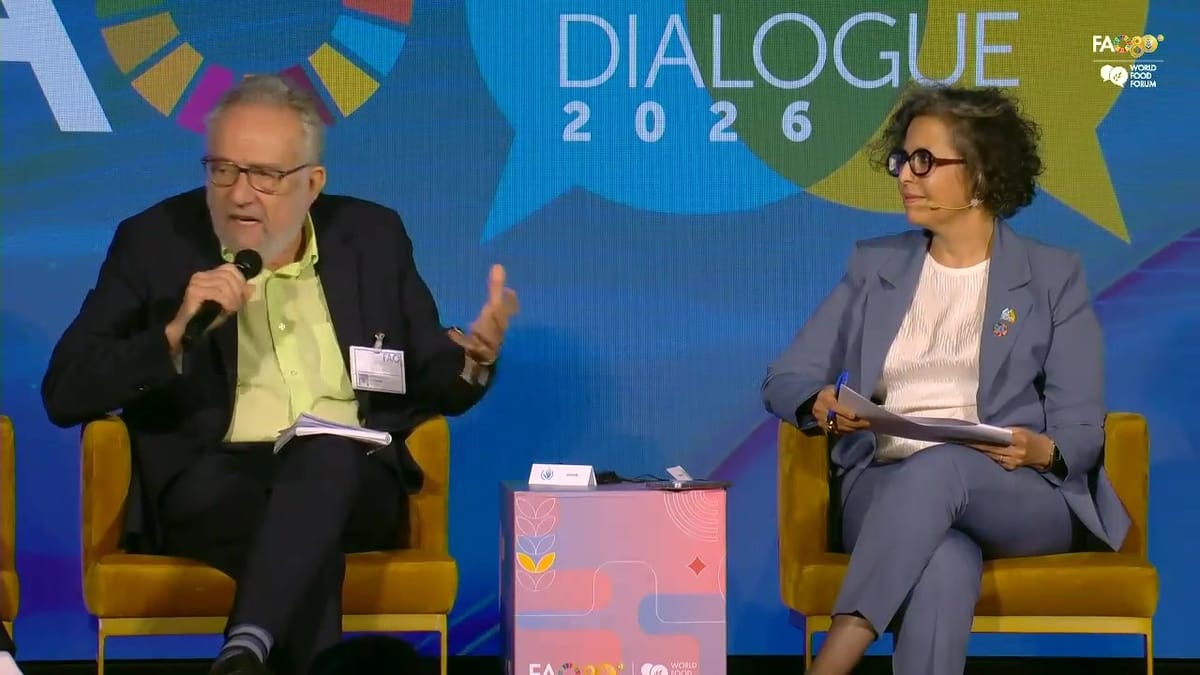
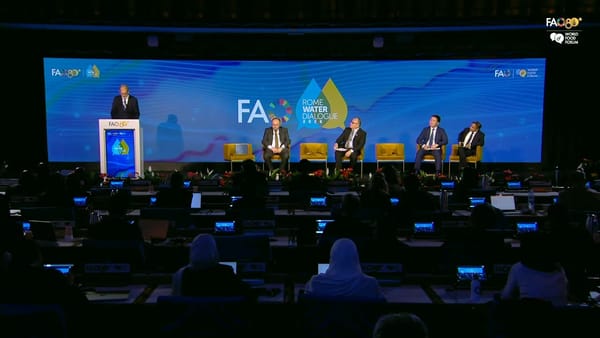
Rome, 14 October 2026. One of the sharpest messages to governments at the high-level session of the FAO Rome Water Dialogue 2026 came from the UN Special Rapporteur on the human rights to safe drinking water and sanitation, Pedro Arrojo Agudo. Asked for his message to the UN Water Conference, he turned to the ministers and ambassadors in the Plenary Hall: "Excellencies, Excellencies, do not keep this project in your drawer."
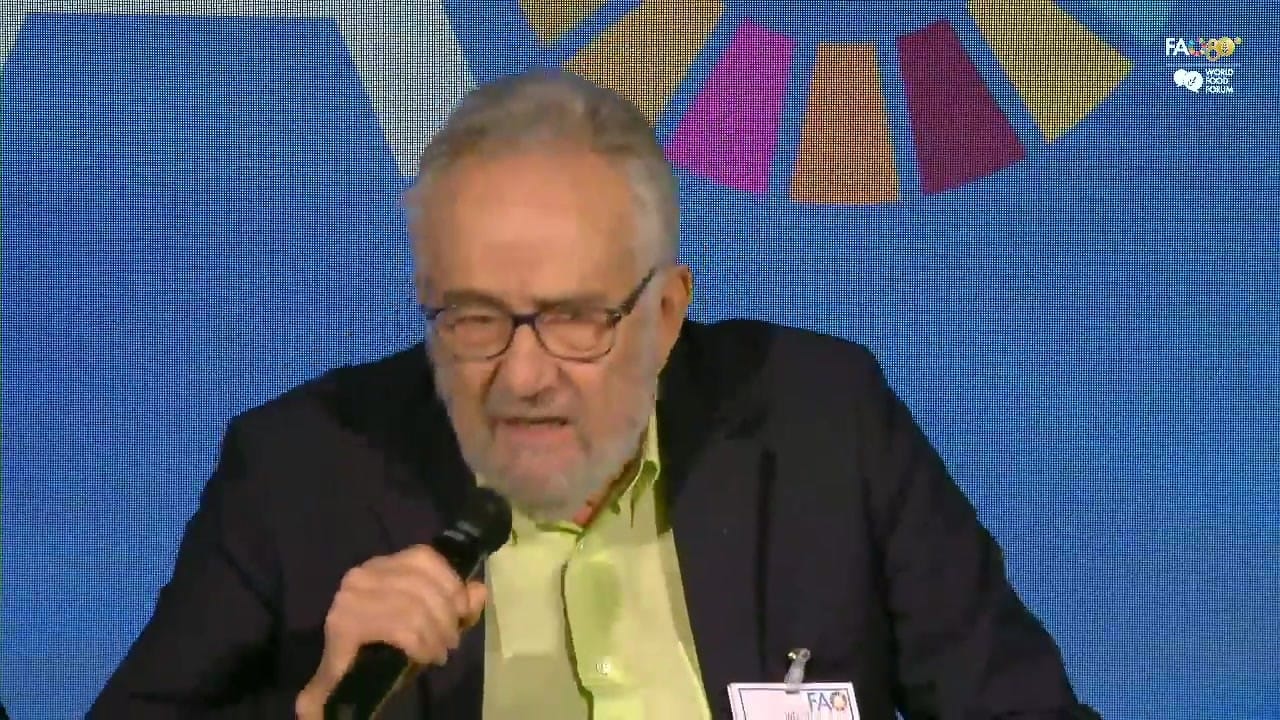
A common good, not a commodity
Arrojo spoke on the stakeholder panel that followed the ministerial and high-level panels, moderated by Nora Berrahmouni, Deputy Director of FAO's Land and Water Division. His report on democratic water governance, presented to the UN General Assembly in July 2025, had referred to FAO's global dialogue and, in the words of FAO's opening presentation that morning, "recognised that water tenure is essential to good governance of freshwater and aquatic ecosystems." The moderator asked him what countries should do about customary rights that legal frameworks do not reflect, and what water tenure can contribute to the realisation of the human right to water.
Speaking in Spanish, he offered three reflections. "If we wish to promote responsible governance of water tenure and related duties and guarantee the right of human beings to drinking water, then we have to manage water as a common good and not as a commodity." Second, this requires "a democratic and participatory governance like that which is practiced by indigenous peoples and farming communities, pastoralists and fisherfolk, based on their community-based management models that leave no one behind." Third, in complex modern societies, "states and governments have to guarantee a public dominion of these public goods above and beyond private assets," managed in a way that is "transparent, with public accountability and participatory in nature," with women "practically and effectively involved."
Four asks of governments
In the second round, Arrojo set out what he wants governments to do. First, "to recognize the rights and record them urgently and unapologetically." Second, to "commit by law financial support to community-based institutions," as Colombia has done. Third, budget priority for water in the most vulnerable communities, following "the example of women of the most impoverished communities, who know exactly what priority is."
And last, the line that gives this article its title: "Excellencies, Excellencies, do not keep this project in your drawer. You have been brave enough to look in the eyes the key issue of the nexus between water and food and the related rights. So please keep it up. Forge ahead with this project because here we presented the principles that now will have to be developed."
For the UN Water Conference in Abu Dhabi in December, he asked that it be institutionalised "as a responsibility of the United Nations and not the private sector," that it open to "the rights holders and the social actors that, often with women at the helm, are criminalized and persecuted because they claim these rights," and that it take "a rights-based approach … opening these up, these human rights to the perspective of the nexus between water, food, and health."
From principles to practice
Arrojo's first ask, to recognise and record rights, is the first of the twelve draft principles that Stephen Hodgson presented that morning (our report). It is also where CRPG's water tenure work in Indonesia starts: customary users, community water systems and other users without a permit are invisible to the formal system until someone records them. CRPG Director Mova Al'Afghani, PhD, made that point on Monday's water tenure panel (read our report: Making invisible water users visible). On the same stakeholder panel, Barbara Schreiner of the Water Integrity Network made a parallel call to implement the draft now (our report); for what governments said about the draft, see our report on the high-level panels.
A note on sources. Arrojo spoke in Spanish. Quotations are taken from the session's English interpretation channel, recorded and transcribed automatically by CRPG using Plaud, and lightly edited for false starts; omissions are marked with an ellipsis. The title quotation was checked against CRPG's floor recording of the Spanish original: "No guarden, excelencias, no guarden este proyecto en el cajón." All quotations will be checked against the UN transcript of the session once it is published, and any change will be noted at the foot of this article. Images: ©FAO, stills from FAO's webcast of the session on UN Web TV, each matched to the timestamp of the words it accompanies.