'You cannot do it without transparency': Barbara Schreiner on water tenure, integrity and implementation
The Water Integrity Network's Barbara Schreiner said allocation systems fail in their design and in their implementation, and urged countries not to wait: 'We need action now.'

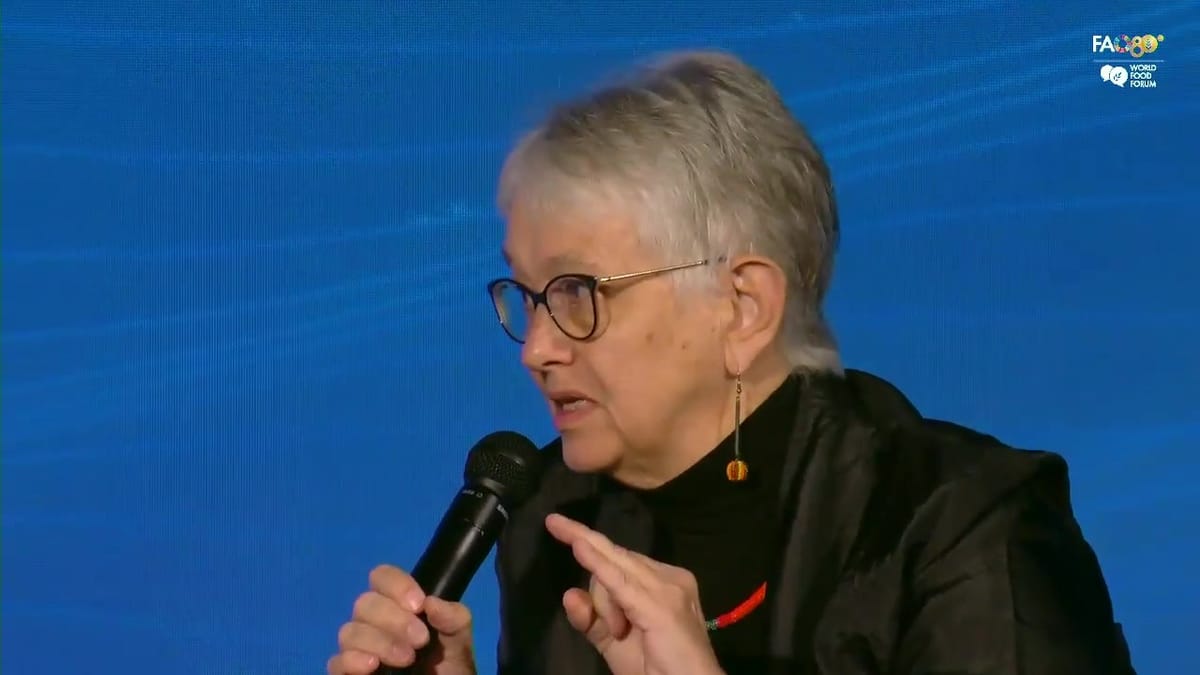
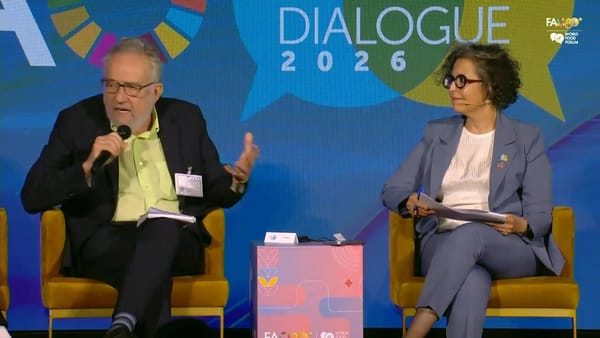
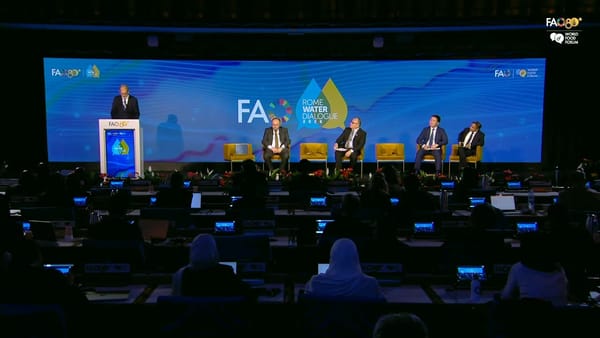
Rome, 14 October 2026. Water allocation systems break down in two places, Barbara Schreiner told the high-level session of the FAO Rome Water Dialogue 2026: in how they are designed, and in how they are run. The Executive Director of the Water Integrity Network was on the stakeholder panel, asked how transparency and accountability can improve water allocation. Her answer to the UN Water Conference was blunt: "If you really want to achieve water tenure systems that achieve equity and sustainability, you cannot do it without transparency, without accountability, and without real participation. And I mean real participation, not token participation."
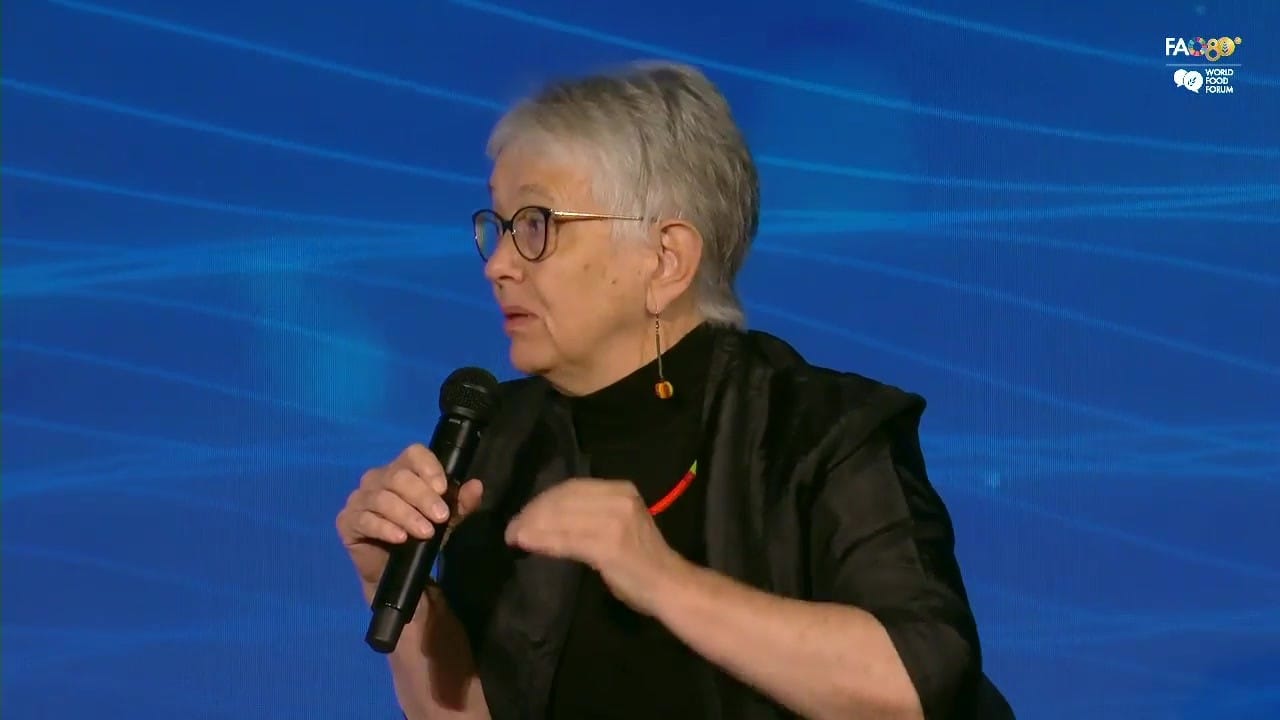
Where allocation systems break down
For the Water Integrity Network, Schreiner said, transparency and accountability are "elements of integrity". The first failure point is design, "where the design actually fails to meet the requirements to achieve equity and sustainability." She gave examples: "The systems that exclude customary use or indigenous use practices. The systems that require permits from hundreds of thousands of peasant farmers scattered across a huge hinterland that will never get permits because the administration can't actually deliver that number of permits or enforce that number of permits. Those are fundamentally systems that are designed with a lack of integrity and a lack of accountability."
The second is implementation. "Our research has shown us direct corruption, bias, massive influence by vested interests in terms of who gets water and who doesn't get water, falsification of data when people are reporting on who's using water, on pollution." Hence her conclusion: "the principles of accountability and transparency are absolutely critical, if we want to see that the water allocation systems are transformed into workable systems and actually serve the objectives that they are intending to serve."
Don't wait
Schreiner was also direct about the draft principles for the responsible governance of water tenure, presented that morning by Stephen Hodgson (our report). "We have wonderful draft principles on the table. I think they are excellent," she said, noting that she had been involved in the process. "They have to be turned into implementation; otherwise, they just sit there and they are useless." That will mean that "a whole lot of countries have to go back to the drawing board and go, 'Oh dear, our systems don't meet these. How do we need to change our systems in order to address these?'"
Her third point was about timing: "Don't wait for them to be approved principles. They are urgent. We need action now. People are excluded. Their rights are not protected. The change has to happen now. So let's move with these principles draft as they are. Let's move into implementation at this point." She also used her first answer to note how far the field still has to go on gender equality, and to credit the women and men of the team that had brought the draft this far.
The permit problem
Schreiner's example of permits that hundreds of thousands of farmers will never get describes Indonesia closely. Many rural water users there, from smallholder irrigators to village water systems, hold no permit, and the formal system that cannot see them cannot protect them either. CRPG's water tenure assessments are built to make those users visible, the point CRPG Director Mova Al'Afghani, PhD, made on Monday's water tenure panel (read our report: Making invisible water users visible). Draft principle 11, on enforceability and accessibility, addresses the same problem: permitting systems that are too burdensome for ordinary users. On the same panel, the UN Special Rapporteur Pedro Arrojo urged governments not to keep the draft "in your drawer" (our report); for what governments said, see our report on the high-level panels.
A note on sources. Schreiner spoke in English. Her words are taken from the session's English audio channel and from CRPG's own floor recording, both transcribed automatically by Plaud, and lightly edited for false starts. They will be checked against the UN transcript of the session once it is published, and any change will be noted at the foot of this article. Images: ©FAO, stills from FAO's webcast of the session on UN Web TV, each matched to the timestamp of the words it accompanies.