An outpouring of support for responsible water tenure at the high-level Rome Water Dialogue
Ministers, ambassadors and senior officials from ten countries and the Asian Development Bank responded to FAO's draft principles on water tenure. Here is what each said, in their own words.

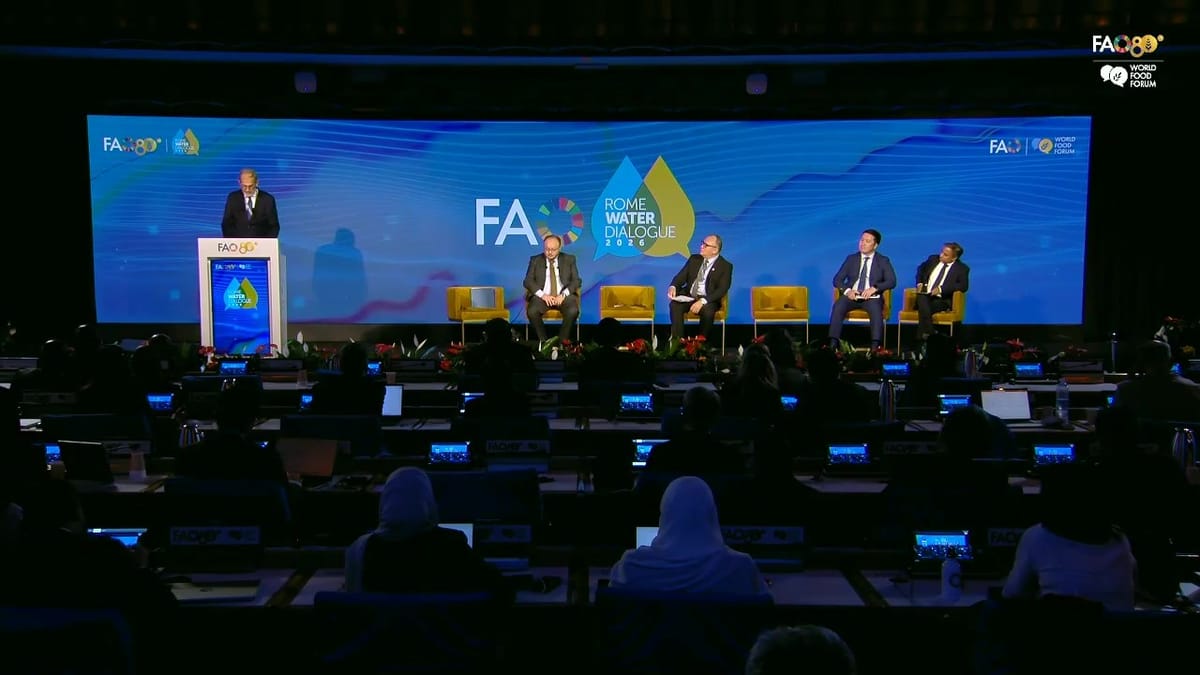
Rome, 14 October 2026. When FAO put its twelve draft principles for the responsible governance of water tenure before governments at the high-level session of the Rome Water Dialogue 2026, the response from the floor was an outpouring of support. Ministers, ambassadors and senior officials from ten countries, and the Asian Development Bank, spoke on two panels. Five of them welcomed the draft by name, several others endorsed water tenure itself, and the rest described national reforms that the draft would frame. Here is what each said, in their own words.
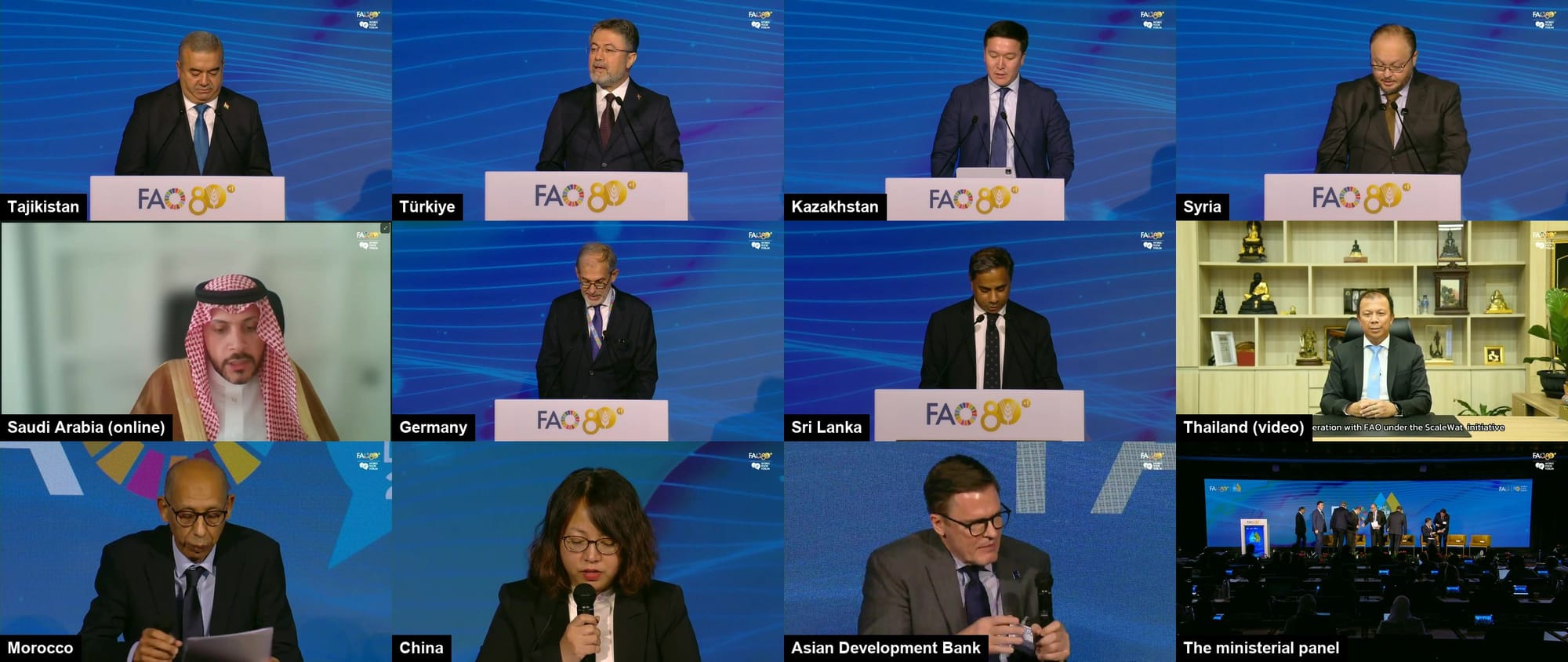
The ministerial panel
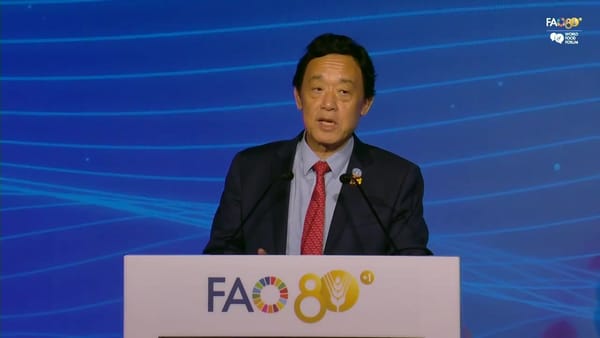
Tajikistan. Minister for Agriculture Qurbon Hakimzoda listed "water rights and institutions" among his country's four priorities: "Transparent and protected rights to water give farmers certainty and stimulate private investment and water saving and guarantee social justice for small holders." He linked the draft to the next UN water conference in Dushanbe in 2028: "We are convinced that the draft principles … which are being drafted under the aegis of the FAO … should become a vital component of the Dushanbe framework program." He called on the international community and financial institutions to broaden assistance for "the evaluation of water rights and the mobilisation of investment in irrigation infrastructure".
Türkiye. Minister of Agriculture and Forestry İbrahim Yumaklı said "the available water is to be allocated fairly, transparently, and sustainably among users, sectors, and ecosystems," and that "water cannot be treated merely as a natural resource to be managed and apportioned." He also raised Gaza: "food and water must never, under any circumstances, be used as instrument of pressure or punishment against civilians" (our report).
Kazakhstan. Vice Minister of Water Resources and Irrigation Arsen Zhakanbayev did not refer to the draft principles directly. He described national reforms: "we have established the appropriate set of legislation for the rational use of water resources," along with a national water resources information system that is to become "a unified platform" for monitoring water use, and a project to automate it. He added that "no single country can effectively tackle these modern challenges alone" and that Kazakhstan is "determined to continue to be an active participant in these processes in the development of water cooperation."
Syria. Deputy Minister of Agriculture Moustapha Zakia tied efficiency to governance: "Irrigation efficiency must be combined with a responsible water governance in the area of withdrawal, so that enhanced efficiency does not turn into unsustainable consumption." He closed: "The future of agriculture is not based on increasing the water used, but by increasing the efficiency of its use."
Saudi Arabia. Deputy Minister for Research and Innovation Abdulaziz bin Malek Al Malek, speaking online, was among the most explicit: "We are firmly convinced that water tenure is a right for all individuals, and this is not only protected by policies but by tools that can measure and allow for implementation." He welcomed "the opportunity to debate the draft principles on water tenure," saying "many of these dimensions converge with our experience in Saudi Arabia," and added a condition: "these principles must be guiding principles that are adapted to the certain situations in each of the countries in accordance with national laws." His last words: "We believe that water tenure is essential to protect future generations."
Germany. Ambassador Andreas von Brandt, Permanent Representative to FAO, whose government has supported FAO's work through two water tenure projects, said: "We think there has internationally not yet been enough agreed rules on water tenure or water governance. We are therefore especially delighted that the draft principles of responsible [governance] have been officially presented on Monday, and from the German perspective, they are a good basis for further discussions." He urged member states to carry the work to the UN Water Conference in Abu Dhabi in December.
Sri Lanka. Ambassador Satyajit Arjuna Rodrigo, Permanent Representative to FAO, speaking on behalf of Sri Lanka's minister of agriculture, put it most plainly: "none of these solutions work unless people know who may use the water, how much, and when. This is water tenure." And: "we welcome the draft principles of responsible governance of water tenure, developed under the mandate of COAG, and Sri Lanka stands ready to contribute to the consultations ahead." He ended with FAO's motto, Fiat panis, "let there be bread": "There is no bread without water, and no lasting water without security, without clear rights, fair allocation, and shared responsibility."
Thailand. Chayan Muangsong, Secretary-General of the Office of the National Water Resources, in a video message: "We must also ask who can access and use water, under what conditions, and who is affected by water-related decisions. This is where the concept of water tenure becomes particularly valuable." And: "We may not need one single system for every country, but we can share common principles, principles that support informed, transparent, and accountable water management while enabling water users to participate meaningfully."
The high-level panel
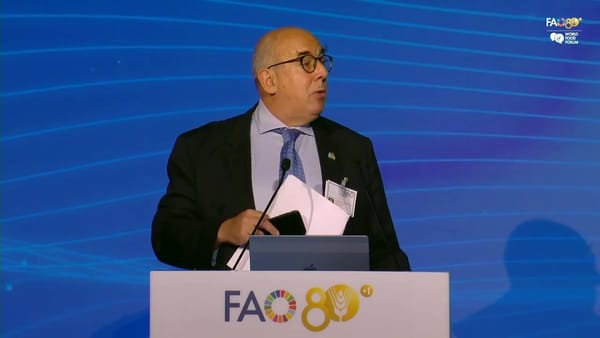
Morocco. Salahddine Dahbi, Director General of Water, framed the question as "How do we guarantee that everybody has a safe and equitable access to water in order to produce and to feed themselves, when this resource is becoming more and more scanty?" His lessons: "water is a public good, the use of which is governed by the law," and "it's in times of scarcity that we need to be able to adapt in a transparent manner." Morocco's first expectation: "voluntary principles that are adapted to the various countries."
China. Xinyang Chi, Deputy Director General at the Ministry of Water Resources: "I think water tenure is the core of institutional enabler for delivering this dialogue's vision," and "more than just a water management tool, water tenure underpins food security, social equity, and ecological integrity."
Asian Development Bank. Winfried Wicklein, Director General: "Water tenure does matter … and we welcome very much the governance principles." His central point: "good governance and responsible investment belong together" (our report).
What the support adds up to
Two threads run through the statements. The first is that tenure is about certainty for the people who use water, in Sri Lanka's words knowing "who may use the water, how much, and when", and in Tajikistan's, rights that "give farmers certainty". The second is flexibility: Saudi Arabia, Morocco and Thailand all asked for principles that guide rather than prescribe, adapted to national law. That fits the way Stephen Hodgson presented the draft that morning, starting from each country's own evidence: "Each country is unique," he said (our report on his presentation).
The next test is implementation. On the stakeholder panel that followed, the UN Special Rapporteur Pedro Arrojo asked governments not to keep the project "in your drawer" (our report), and Barbara Schreiner of the Water Integrity Network warned that it cannot be done "without transparency, without accountability, and without real participation" (our report). For CRPG, whose Director Mova Al'Afghani, PhD, spoke on Monday's water tenure panel, that test begins with the water users the formal system does not see (read our report: Making invisible water users visible).
A note on sources. Quotations are taken from the session's English audio channel, recorded and transcribed automatically by CRPG using Plaud, and lightly edited for false starts; omissions are marked with an ellipsis. Germany, Sri Lanka, China and ADB spoke in English; the other statements are quoted as rendered by the session's English interpretation. All quotations will be checked against the UN transcript of the session once it is published, and any change will be noted at the foot of this article. Images: ©FAO, stills from FAO's webcast of the session on UN Web TV, each matched to the timestamp of the words it accompanies.