Food and water must never be instruments of pressure: Türkiye raises Gaza at FAO's water tenure dialogue
At the high-level session of the Rome Water Dialogue, Türkiye's Agriculture and Forestry Minister İbrahim Yumaklı named Gaza as among the most harrowing examples of why access to water and food must be protected in conflict, and invited countries to Antalya for COP31.

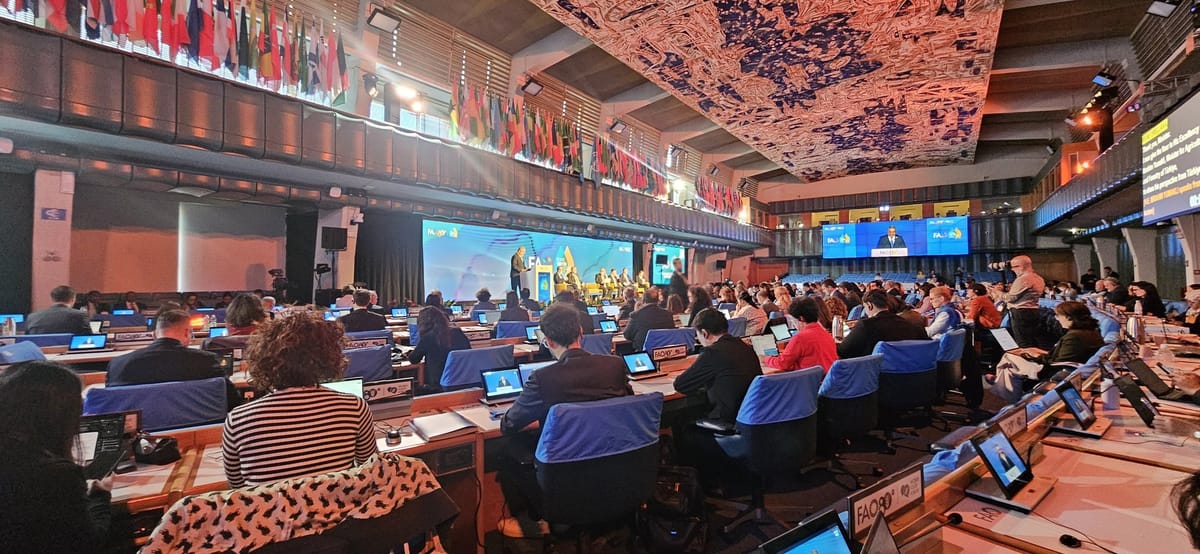
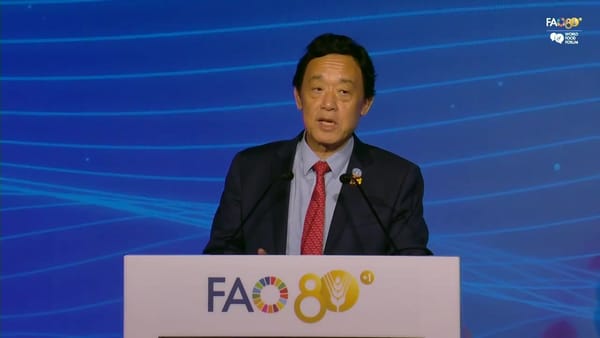
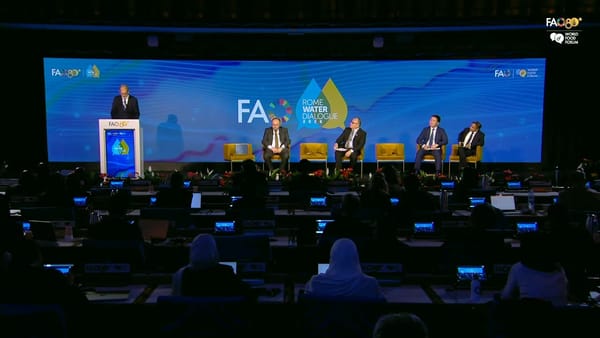
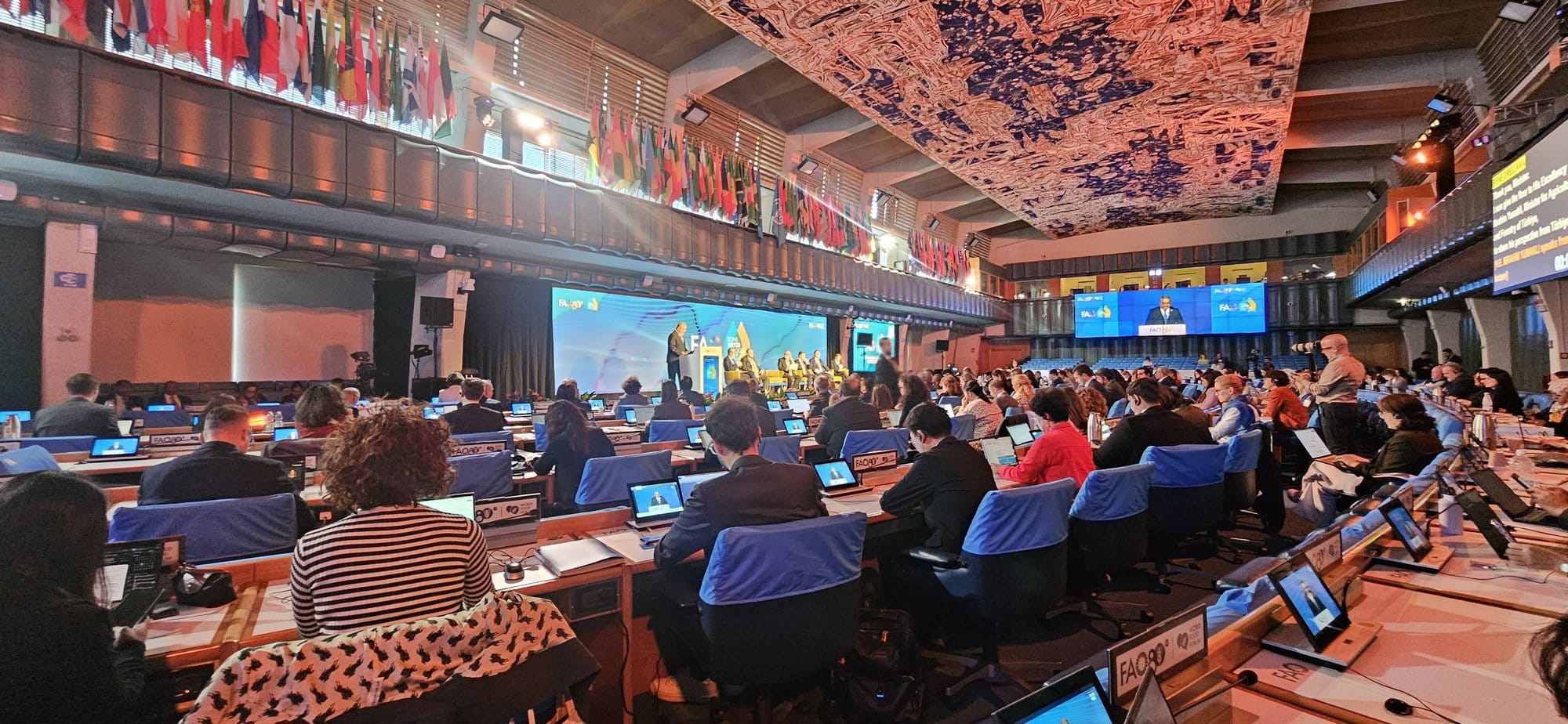
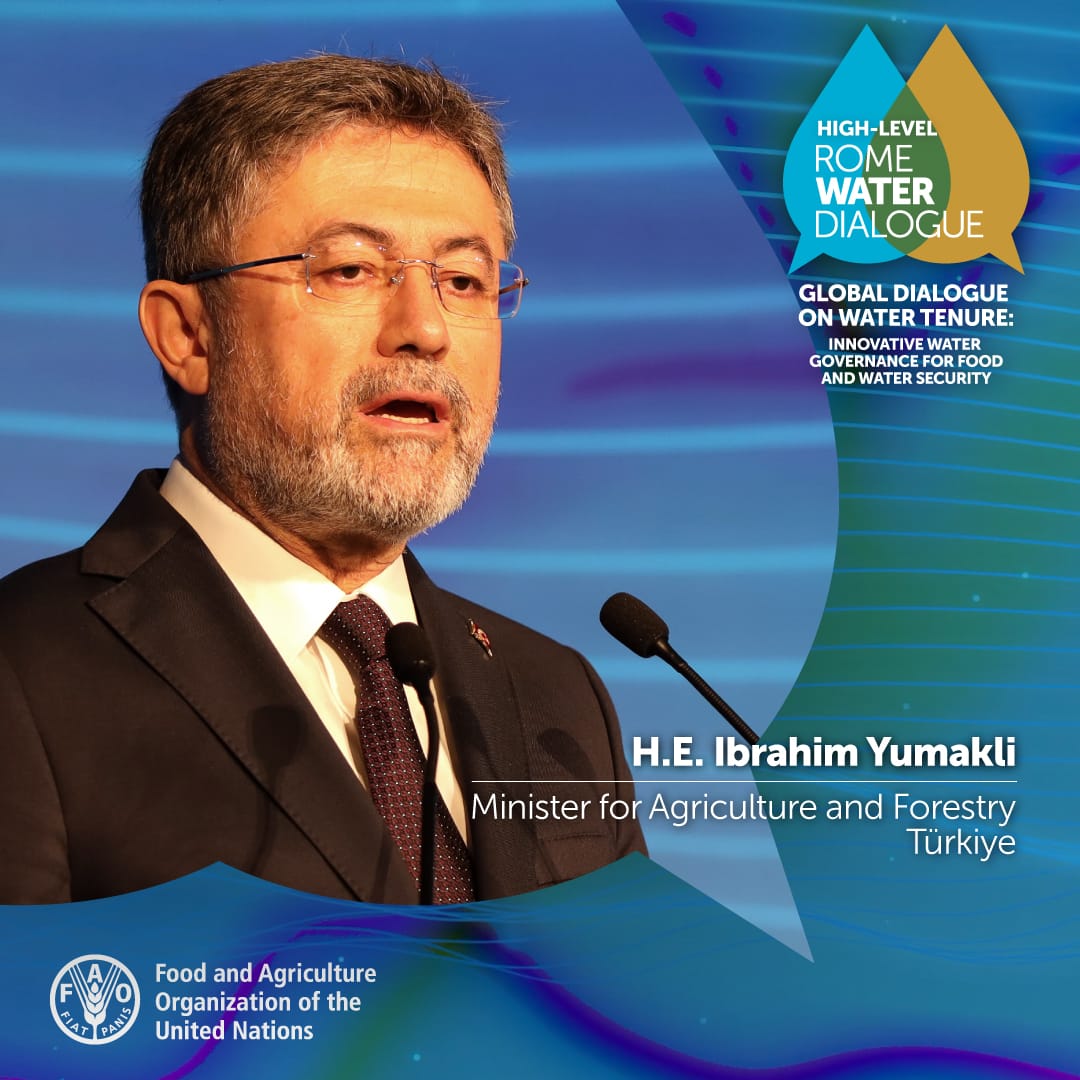
Rome, 14 October 2026. The high-level session of the FAO Rome Water Dialogue 2026 was convened to discuss how water should be shared: who holds rights to it, how those rights are recorded and how allocation can be made fair. When Türkiye took the floor in the ministerial panel on Wednesday morning, its Minister of Agriculture and Forestry, İbrahim Yumaklı, turned to the place where that question is most acute. "The grave situation in Gaza," he said, "is among the most harrowing examples."
Food and water must not be instruments of pressure
Yumaklı spoke in Turkish, shortly after 10:19. He opened with Türkiye's own measures: a ten-year national water plan, grounded in scientific data, that determines which crops are best suited to each river basin given the water available; drought management plans now in place for all 25 of the country's river basins; and a drought forecasting and early warning system to be completed in 2027. Turning to the legal and institutional side of water governance, he said that "the available water is to be allocated fairly, transparently, and sustainably among users, sectors, and ecosystems." Yet water "cannot be treated merely as a natural resource to be managed and apportioned": it underpins food production and "sustains human life itself". "Safeguarding access to water and food therefore becomes all the more paramount in times of crisis and conflict," he said, and the humanitarian crises unfolding in many parts of the world show how vital that access is.
Gaza was the example he gave. "The hardship faced by children in obtaining adequate food, clean water, and humanitarian assistance weighs heavily on all of us," he said. He then made the point that gives this article its focus: "We firmly believe that food and water must never, under any circumstances, be used as instrument of pressure or punishment against civilians. Ensuring safe and uninterrupted access to these basic necessities is a shared humanitarian responsibility."
The most recent figures from FAO and its UN partners show why the point was made in Rome. A joint FAO, UNICEF and WFP release of 23 July 2026 reported that food security and child nutrition in Gaza had improved, but called the gains fragile. An estimated 1.4 million people, 67 percent of the population, were still in crisis or worse (IPC Phase 3 or above), and about 212,000 were in Emergency (IPC Phase 4). More than 70 percent of Gaza's cropland was not accessible and only 3 percent was usable. The agencies named limited access to safe water and sanitation as one of the risks to the gains in child nutrition, and expected some 74,000 children to need treatment for acute malnutrition over the coming year.
The principle Yumaklı invoked has a basis in international law. In Resolution 2417 (2018), adopted unanimously, the UN Security Council strongly condemned the use of starvation of civilians as a method of warfare and the unlawful denial of humanitarian access. It called on parties to armed conflict not to attack, destroy, remove or render useless objects indispensable to the survival of civilians, among them "drinking water installations and supplies, and irrigation works" (UN press release SC/13354).
Cooperation, Gediz and the road to Antalya
The rest of the statement looked beyond crises. Protecting water resources, securing access to food and water, and preparing countries for a changing climate require strong international cooperation, Yumaklı said. Türkiye values FAO's support for capacity development, data and information sharing and technical cooperation, which helps countries strengthen their own water management systems. Experience should be shared more widely, he said, on drought early warning, basin-based water allocation, modern irrigation and digital water management. (The English interpretation says "allocation"; the Turkish original, havza bazlı su hesabı, refers to basin-based water accounting.)
As an example of such cooperation, he cited the Sustainable and Integrated Water Resources Management project in the Gediz basin, which FAO implements with Türkiye's Ministry of Agriculture and Forestry and its General Directorate of Water Management, with funding from the Global Environment Facility. The project works in İzmir and Manisa provinces in western Türkiye, where the Gediz reaches the Aegean.
He closed with an invitation. Türkiye hosts COP31 in Antalya from 9 to 20 November 2026, and Yumaklı said Türkiye is bringing the link between water, food and climate to the centre of the conference agenda. He described an initiative Türkiye has launched to bring water, food and climate together in a shared mechanism that countries steer according to their own conditions, with support for solutions that can be applied in the field, and invited participants to contribute in Antalya. This is the Turquoise Nexus Initiative, which FAO describes as a country-led, multi-stakeholder initiative proposed as a flagship programme of its Food and Agriculture for Sustainable Transformation (FAST) Partnership. It is led by Türkiye's Ministry of Agriculture and Forestry under the coordination of the COP31 Presidency and was presented at the Bonn climate talks in June.
Why access belongs in the water tenure debate
The high-level session was the culmination of FAO's Global Dialogue on Water Tenure, which on Monday presented draft principles for the responsible governance of water tenure. Most of the debate about those principles concerns ordinary times: how to recognise the rights of users who hold no permit, how to allocate water fairly in a drought and how to give people a complaint mechanism they can use.
Türkiye's statement is a reminder that tenure is tested hardest when ordinary institutions break down. A right to water that cannot be exercised during a siege, a displacement or a blockade offers little security. The fair, transparent and sustainable allocation that Yumaklı called for depends on people being able to reach the water in the first place. For CRPG, which works on water tenure assessment in Indonesia, the lesson runs in both directions: tenure rights need to be recorded before a crisis, so that they can be defended during one. That point was made from another angle on Monday, when CRPG Director Mova Al'Afghani, PhD, spoke on the water tenure panel about users the formal system does not see (read our report: Making invisible water users visible).
A note on sources. Minister Yumaklı is listed for the ministerial panel on FAO's programme, and the hall's live captions show the moderator giving him the floor at 10:19. He spoke in Turkish. The quotations above are taken from the session's English interpretation channel, recorded and transcribed automatically by CRPG using Plaud; they will be checked again against the UN transcript of the session once it is published. CRPG's own floor recording of the Turkish original covers the last four minutes of the statement, from 10:21. FAO's own summary of the statement, posted by FAO Land, Soil and Water on X, matches our recording on two points: that safeguarding access to water and food "becomes all the more paramount in times of crisis", and that water "cannot be treated merely as a natural resource to be managed & proportioned". FAO's post does not mention Gaza. The Gaza figures are taken from the FAO, UNICEF and WFP release cited above. The programme and later recordings are on the event page. For earlier days of the Rome Water Dialogue, see our reports on FAO's draft principles and restoring degraded farmland.
Correction, 14 October 2026, 17:20 CEST. After publication, CRPG obtained the English interpretation of the whole statement, and the quotations have been aligned with it. Previously, this article quoted the minister, in CRPG's own translation from the Turkish, as saying that "the grave humanitarian situation in Gaza is one of the most painful examples"; that the difficulties children face "deeply sadden us all"; that food and water must never be used "as a tool of pressure or punishment in the shadow of weapons"; and that access is "our common humanitarian responsibility". The English interpretation renders these as "among the most harrowing examples", "weighs heavily on all of us", "instrument of pressure or punishment against civilians" and "a shared humanitarian responsibility". The opening of the statement, which CRPG's first recording had missed, has been added, and the excerpt has been updated.