Restoring degraded farmland: the missing piece of land degradation neutrality
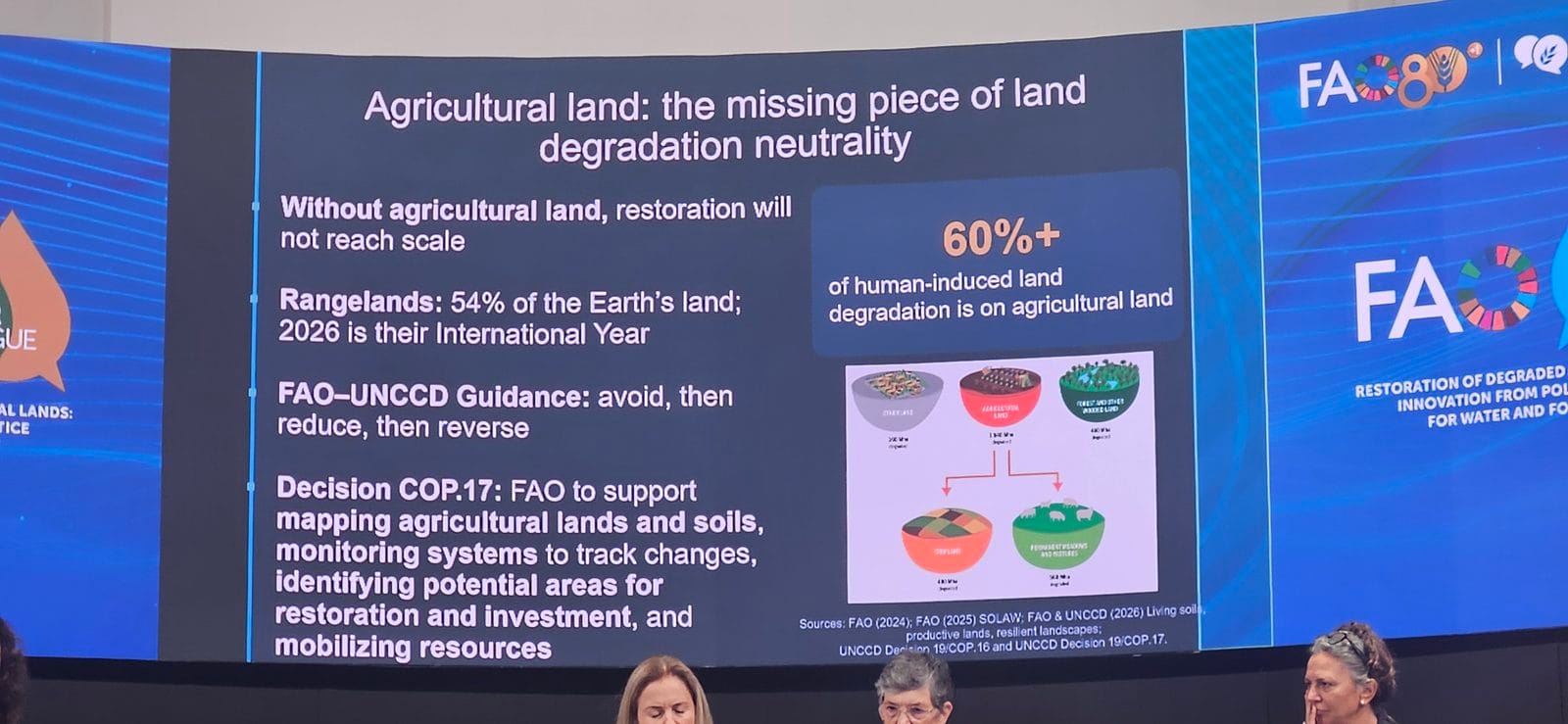
More than 60 per cent of human-induced land degradation is on agricultural land. At the Rome Water Dialogue, FAO and ministers asked how restoration can reach the farms where it matters.


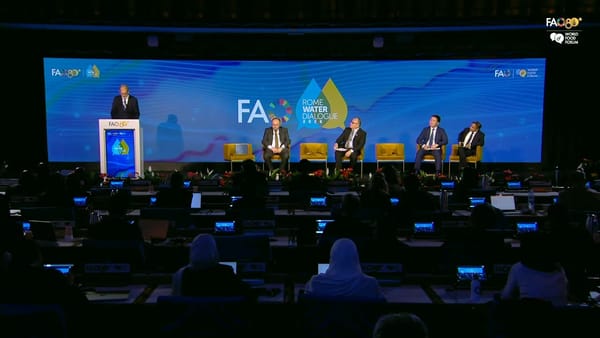
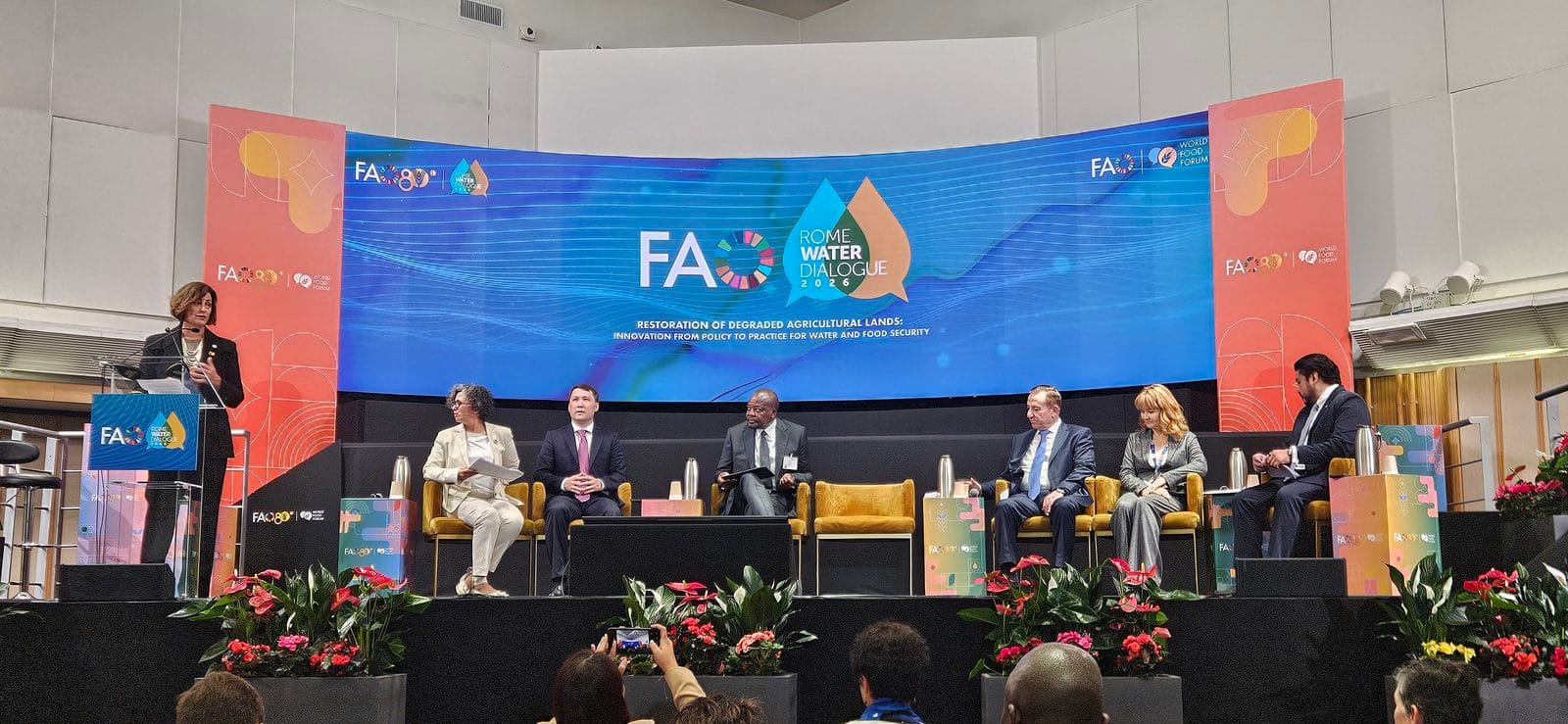
Rome, 12 October 2026. More than 60 per cent of human-induced land degradation happens on agricultural land. That figure set the tone for the session that followed at the FAO Rome Water Dialogue 2026, Restoration of Degraded Agricultural Lands: Innovation from Policy to Practice for Water and Food Security. Ministers and senior officials from Kenya, Jordan, Kazakhstan, the Russian Federation and Central America joined FAO to discuss how restoration can reach the farms where degradation actually happens.
Agricultural land: the missing piece
The argument was simple: without agricultural land, restoration will not reach scale. Rangelands alone cover 54 per cent of the Earth's land, and 2026 is their International Year. New guidance from FAO and the UN Convention to Combat Desertification (UNCCD), Living soils, productive lands, resilient landscapes, sets out a sequence: avoid degradation first, then reduce it, then reverse it. Under a decision of the latest UNCCD Conference of the Parties, FAO will support countries in mapping agricultural lands and soils, building systems to monitor change, identifying areas for restoration and investment, and mobilising resources.
Opening the session, FAO Deputy Director-General Beth Bechdol said good practices already exist. The open question is why they are not adopted, or financed, at scale. Soil was presented as water infrastructure in its own right: healthy soil absorbs and stores rain, while degraded soil increases runoff and leaves farms more exposed to drought. Innovation, the session heard, is not only technology. Soil data matters only when it reaches farmers as advice they can use, backed by policy, institutions, finance and secure tenure.
What countries are doing
Kenya's Cabinet Secretary for Agriculture and Livestock Development described a country where most land is arid or semi-arid, and a strategy that treats aridity as an opportunity: the state invests in dams and irrigation, while farmers, cooperatives and private investors produce. Kenya is also rolling out digital soil information for farmers, linked to subsidised inputs and advisory services.
Kazakhstan presented a new law on soil protection, combined with digital mapping of degraded farmland and an FAO-supported project to monitor soil organic carbon. Jordan, one of the most water-scarce countries in the world, put land tenure, nature-based solutions and Indigenous knowledge on the agenda. The Russian Federation stressed risk-based monitoring over reactive response, and the Central American Agricultural Council argued that regional commitments become actionable only when sectors, knowledge and finance are linked. A short film on FAO's SoilFER programme showed how soil fertility maps are guiding farmers' fertiliser choices in Central America's Dry Corridor.

Why tenure matters for restoration
For CRPG, the two sessions of the day belong together. The morning session on water tenure showed how often farmers' rights to water go unrecorded. The restoration session showed that farmers are the ones who must invest in soil. A farmer with insecure rights to land or water has little reason to make that investment. Restoration that reaches scale will need tenure security, for land and for water, as much as it needs soil data and finance.
The Rome Water Dialogue continues through the week, with a high-level session on the Global Dialogue on Water Tenure on Wednesday, 14 October. Programme and recordings are on the event page.