'Pricing is not privatization': QU Dongyu opens the high-level Rome Water Dialogue on water tenure
FAO's Director-General told ministers that many water crises are governance crises, that water pricing must start from social justice, and that clear water rights protect customary users and build trust.

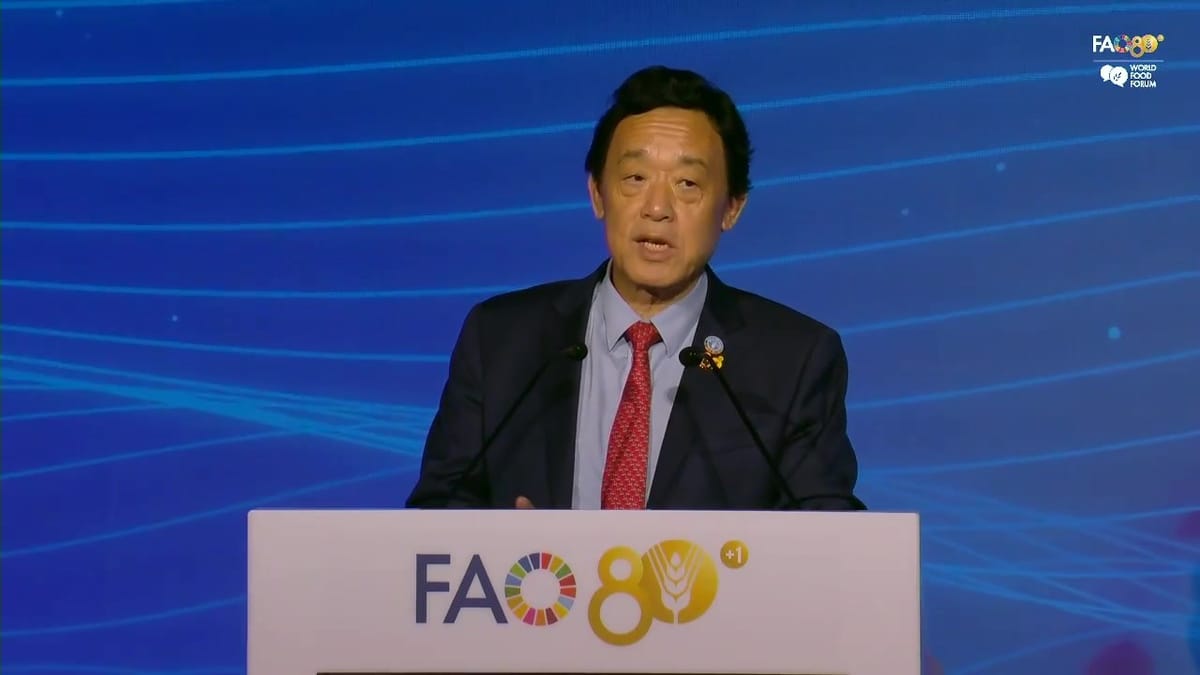
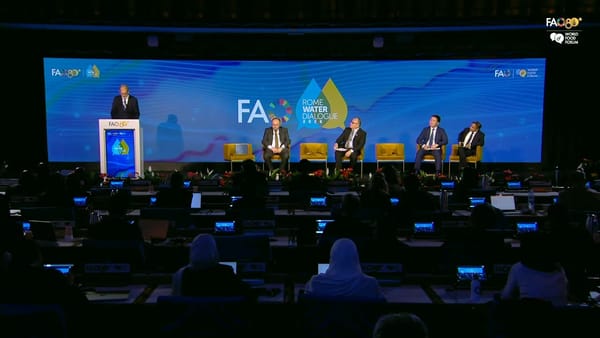
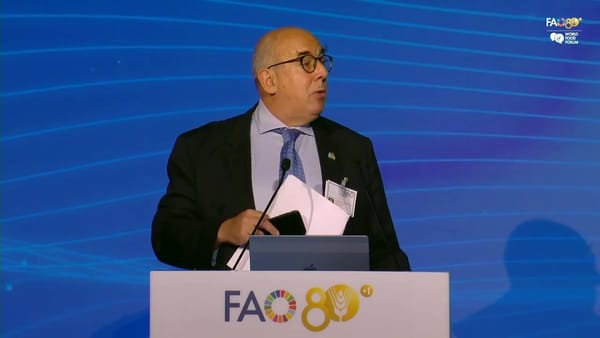
Rome, 14 October 2026. "Pricing is not privatization." FAO Director-General QU Dongyu drew that line, and warned that people misread him on it, as he opened the high-level session of the FAO Rome Water Dialogue 2026 in the Plenary Hall at FAO headquarters. The session, the fifth edition of the Dialogue and the centre of its week, was devoted to the Global Dialogue on Water Tenure and to the draft principles for the responsible governance of water tenure.
QU greeted King Letsie III of Lesotho, ministers from Tajikistan and Türkiye, ambassadors, and the UN Under-Secretary-General for Economic and Social Affairs, Li Junhua, who was attending the World Food Forum in person for the first time. His remarks set out why FAO thinks water tenure is the missing piece of water governance, and what he expects the next two months to deliver.
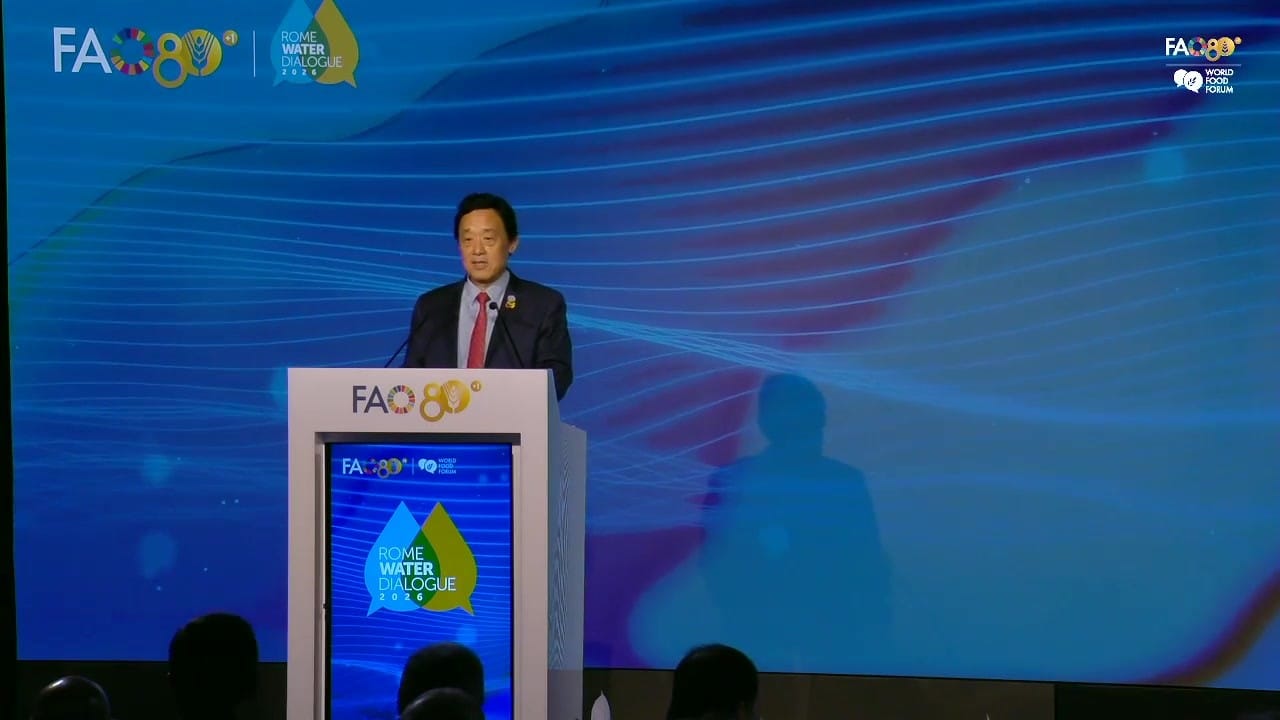
Water crises are governance crises
"Water security is food security," QU said, and the two cannot be secured separately: "We cannot achieve the one without the others. And we cannot secure water without changing how agriculture uses and manages it." Agriculture, in his framing, is not only the largest user of freshwater but the sector with "the scale, knowledge, capacity to deliver solutions." For years, he said, conferences and COPs had opened by pointing out that agriculture withdraws 70 per cent of freshwater, always in a negative way. He wanted agriculture put at the centre of the agenda instead, as a source of solutions.
Then came the line that ties his speech to the session's subject: "Many water crises are also governance crises. Clear rules on access, allocation, and responsibility are needed to balance these demands fairly."
He listed four lines of action:
- use water more efficiently, "through the innovation, technology, reliable data, and transparent water accounting";
- "ensure the fair, reliable access, especially for small-scale producers, women, indigenous people, and the vulnerable community";
- "prepare for the drought, the flood before losses occur", which for him means investing in water infrastructure that turns floods into a resource ("No investment, no harvest. Accumulate problems."); and
- protect "the forests, rivers, lakes, soil, and ecosystems", because "they regulate the water cycle, and agricultural production depend on them."
The four must move together, he said: efficiency without inclusion deepens inequality, and resilience cannot last without healthy ecosystems and viable livelihoods.
The luxury-car test
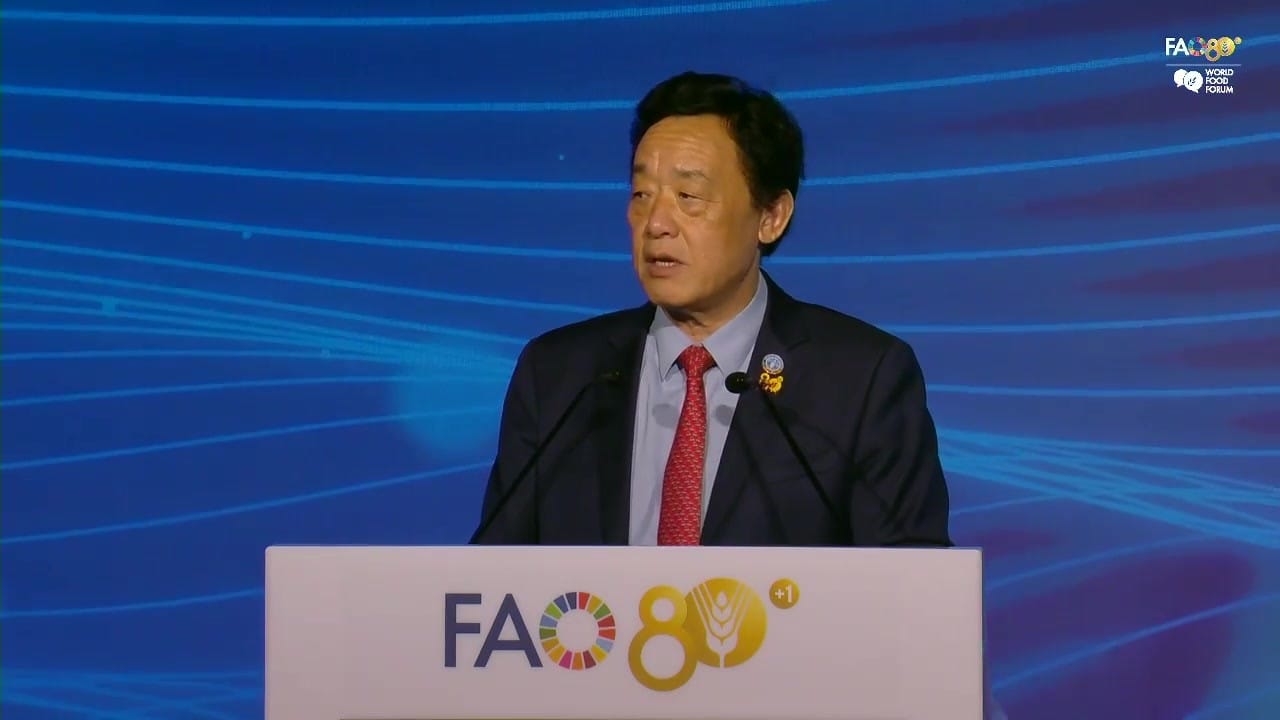
The most quotable passage was about price. Undervaluing a scarce resource, QU argued, encourages waste, weakens investment and distorts allocation; "with sound public policy, appropriate pricing and incentives can improve efficiency" and sustain services. He then anticipated the objection: "But pricing is not privatization. Be careful. A lot of people, they misinterpret what I said."
Pricing, he said, depends on scarcity, on efficiency and "on the social justice". He gave an example: "If you have a luxury car, you have to pay more price to wash your car. Not necessarily ask the poor people to pay more. No. So that's water price. Number one is social justice." Water, he added, has cultural, socioeconomic and environmental value, and "responsible governance must recognize all" of these values.
Where water tenure comes in
"This is where the water tenure becomes essential," QU continued. "Clear rights, responsibility, and allocation support fair incentive, responsible investment, and accountable decisions. They also protect customary rights, prevent disputes, and build trust."
He recalled that FAO launched the Global Dialogue on Water Tenure at the 2023 UN Water Conference, on a mandate from its Committee on Agriculture, and that the dialogue rests on country-driven assessments and broad consultation. The draft principles were on the table that morning, but agreeing on them is not the end point: "Our ambitions must go beyond agreeing on principle. We must help countries put them into practice with better policy, stronger institutions, transparent allocation, and investment." FAO, he said, will support members through water tenure assessment, water accounting and national water roadmaps, and will connect governments with farmers, researchers, civil society, financial institutions and the private sector.
His yardstick was practical: "The real measure of success is whether farmers have the reliable water", whether communities are prepared for drought and flood, and whether agriculture produces more and better with less. He asked participants to carry the solutions from Rome to the 2026 UN Water Conference in Abu Dhabi in December, and appealed for plain speaking on the way there: technical agencies, he said, should have "more open debate", so that there is more consensus before the conference.
What it means for Indonesia
QU's two claims, that water crises are governance crises and that a price is not a sale, map closely onto Indonesian debates. In Indonesia, the fear that charging for water means commercialising it runs deep: in 2015 the Constitutional Court annulled the 2004 Water Resources Law (decision 85/PUU-XI/2013) over concerns that it allowed water to be privatised, and the argument resurfaces whenever water charges or private participation are discussed. QU's distinction between pricing for efficiency and social justice on the one hand and privatisation on the other is a useful one for that debate. So is his ordering: clear rights first, then incentives. A charge or a permit system built on top of unrecorded rights will miss the users who need protection most, the point CRPG Director Mova Al'Afghani, PhD, made at Monday's technical session on water tenure (read our report: Making invisible water users visible).
The principles QU referred to were presented later the same morning by Stephen Hodgson (our report), and ministers and agencies responded to them in the panels that followed (our report on the high-level panels). For background on the concept, see water tenure on Know CRPG.
A note on sources. QU spoke in English. Quotations are taken from the session's English audio channel on UN Web TV, transcribed automatically by CRPG with two independent speech-recognition systems (Plaud and Whisper) and compared line by line, and lightly edited for false starts; his spoken English is otherwise left as delivered. The UN has not yet published a transcript of this session; when it does, the quotations will be checked against it and any change will be noted at the foot of this article. Images: ©FAO, stills from FAO's webcast of the session on UN Web TV, each matched to the timestamp of the words it accompanies.