'More than 40 plans, but only six investment portfolios': ministers on drought and irrigation at the Rome Water Dialogue
FAO's Beth Bechdol warned that drought plans rarely become investments and that irrigation is not an automatic solution; ministers from the Dominican Republic, Syria, Jordan, Uganda and Italy described how they are responding.

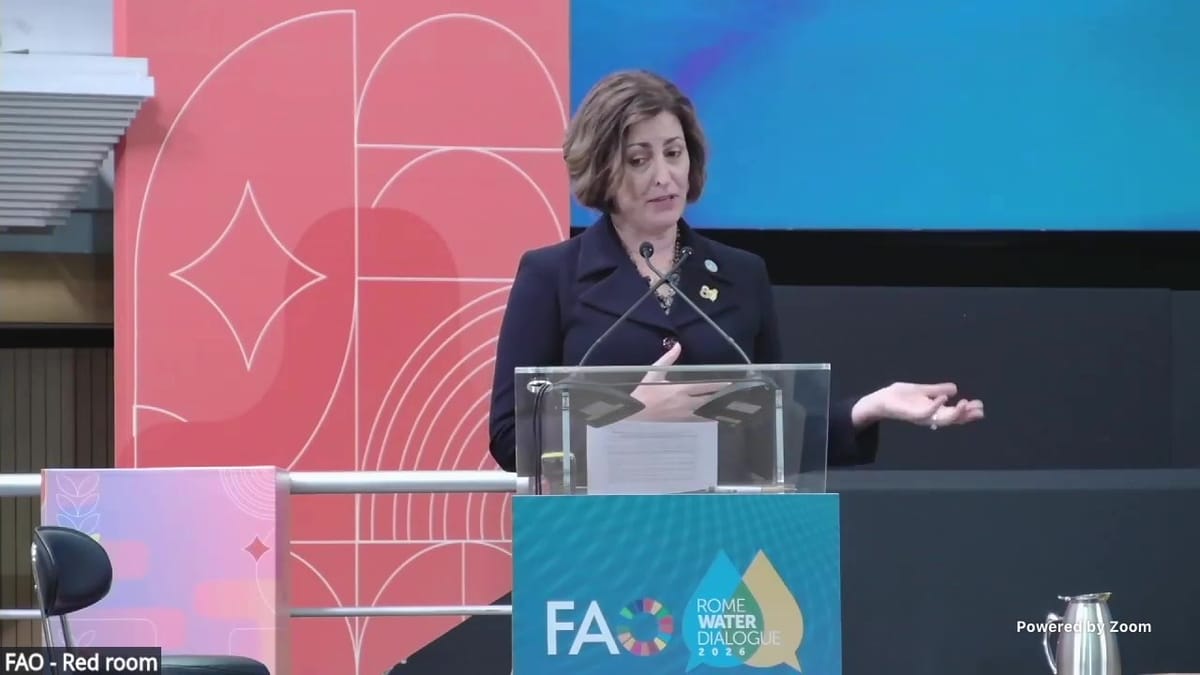
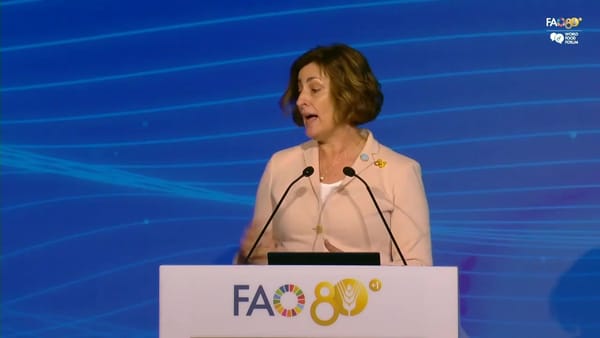
Rome, 13 October 2026. "More than 40 plans, but only six investment portfolios." FAO Deputy Director-General Beth Bechdol put that gap at the centre of the second day of the FAO Rome Water Dialogue 2026. She was opening the technical session on innovation, planning and investment in drought management and irrigation, held in FAO's Red Room. FAO, she said, has helped more than 40 countries develop or update national drought management plans, supported 12 to align their policy and planning, and six to turn those plans into investment portfolios. "There's a gap."
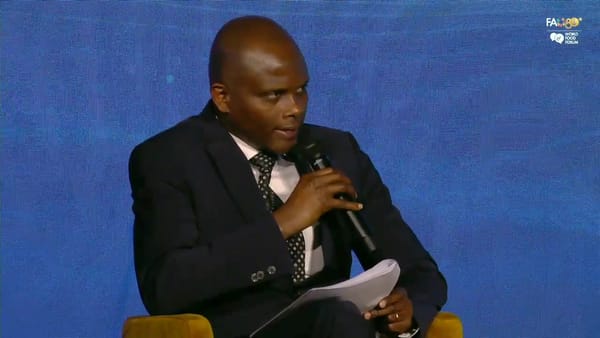
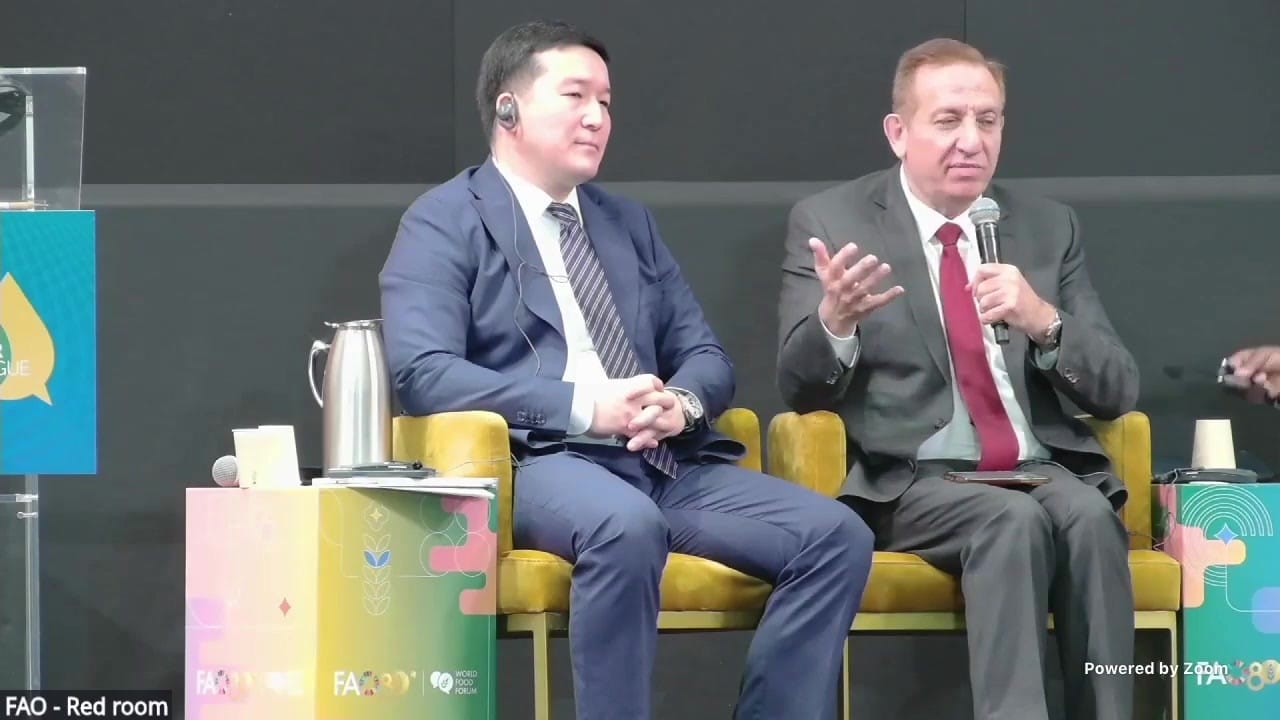
The ministerial panel that followed, chaired by Lifeng Li, Director of FAO's Land and Water Division, heard how six governments are trying to close it, from a small island state to a country emerging from war.
The cost of delay
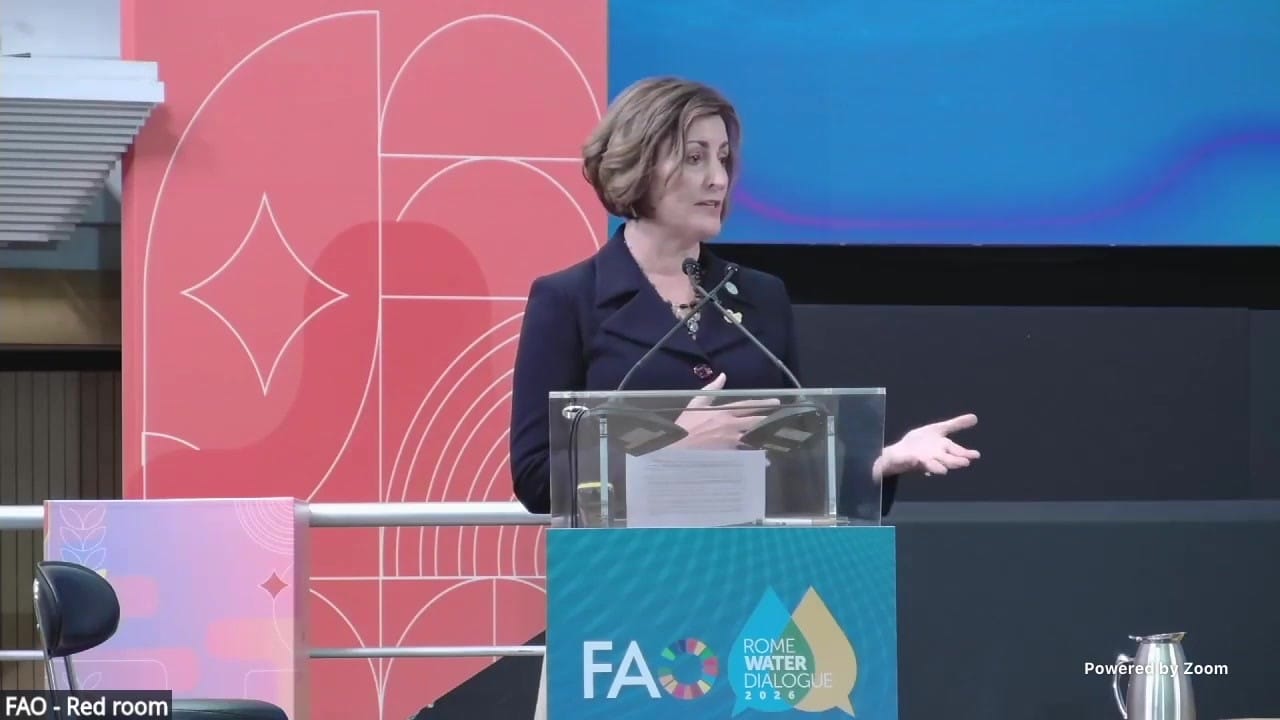
Bechdol had just returned from Jordan, Lebanon and Saudi Arabia, where she had seen the dilemma "firsthand": "how to sustain food production and livelihoods in one of the world's driest regions without putting even greater pressure on already scarce water." Her test for every country was the same: "Can countries turn drought response and water and irrigation plans into investment and into action before further losses occur?"
"Drought risk can be anticipated," she said, but "too few of the national plans that are being developed are yet to be financed". She cited the UNCCD's estimate of annual drought damages of 307 billion US dollars in the countries assessed, and said agriculture accounts for nearly 80 per cent of the economic losses from drought.
She was also careful about the remedy. "Irrigation is part of the answer," she said, "but I would also say irrigation is not an automatic solution. Poorly planned irrigation can put further pressure on scarce water resources. And greater efficiency does not always mean lower water use when water saved can be used to expand the area under irrigation." Countries therefore need to be clear "where irrigation makes sense, how water withdrawals will be governed, and whether the investment will support production over time."
What the ministers said
Dominican Republic. José Ignacio Paliza, Minister of the Presidency, spoke in Spanish of drought as cyclical rather than a passing event, and as a reason to accelerate investment. In the English interpretation, he described dam projects with irrigation systems under development, an investment of more than 500 million US dollars to 2033 to bring irrigation technology to smallholders, who hold most of the country's farmland, and the training of about 7,000 technicians and farmers. He also stressed land-use planning in a country of a little over 48,000 square kilometres with a population density about ten times the regional average. And he noted that the Dominican Republic shares its island, and its ecosystems, with Haiti: "whatever happens on one side of the island affects the other."
Syria. Deputy Minister of Agriculture Moustapha Zakia, speaking in English, said Syria is emerging from "14 or 15 years of war" with almost all its water infrastructure destroyed, but also from "bad practices historically that depleted our natural resources". The ministry's new strategy puts water first, and changes the question it asks: "how much food can we produce for each cubic meter of water rather than ... how many hectares we can grow." He described the Badia, the semi-desert steppe receiving 100 to 200 millimetres of rain a year, as covering about 10.5 million hectares, around 58 per cent of the country, and asked for international help with on-farm irrigation technology, because "water doesn't stop at the border."
Jordan. Minister of Agriculture Saeb Khresat said Jordan's annual share is "less than 60 cubic meters per capita", far below the water poverty line. He described the national water strategy, the planned desalination and conveyance of Red Sea water from Aqaba to the major cities, which he put at around 6 billion US dollars for 300 million cubic metres a year, and the reuse of almost all treated wastewater in agriculture after blending with fresh water. Agriculture uses 48 per cent of the country's water budget, he said. "It's our destiny. We have to deal with the situation." His conclusion: Jordan is water-scarce but "water secure ... through the wise governance we have in the water sector."
Uganda. Bright Rwamirama Kanyontore, Minister of State for Animal Industry, said Uganda is shifting from rain-fed farming to irrigation because of failed seasons and prolonged droughts, especially in the cattle corridor. Its strategy is to invest in farm infrastructure and solar-powered pumps, aiming for three growing seasons a year instead of two, and to build water infrastructure for crops, livestock and fisheries alike. Climate change, he said, "should present an opportunity for investment".
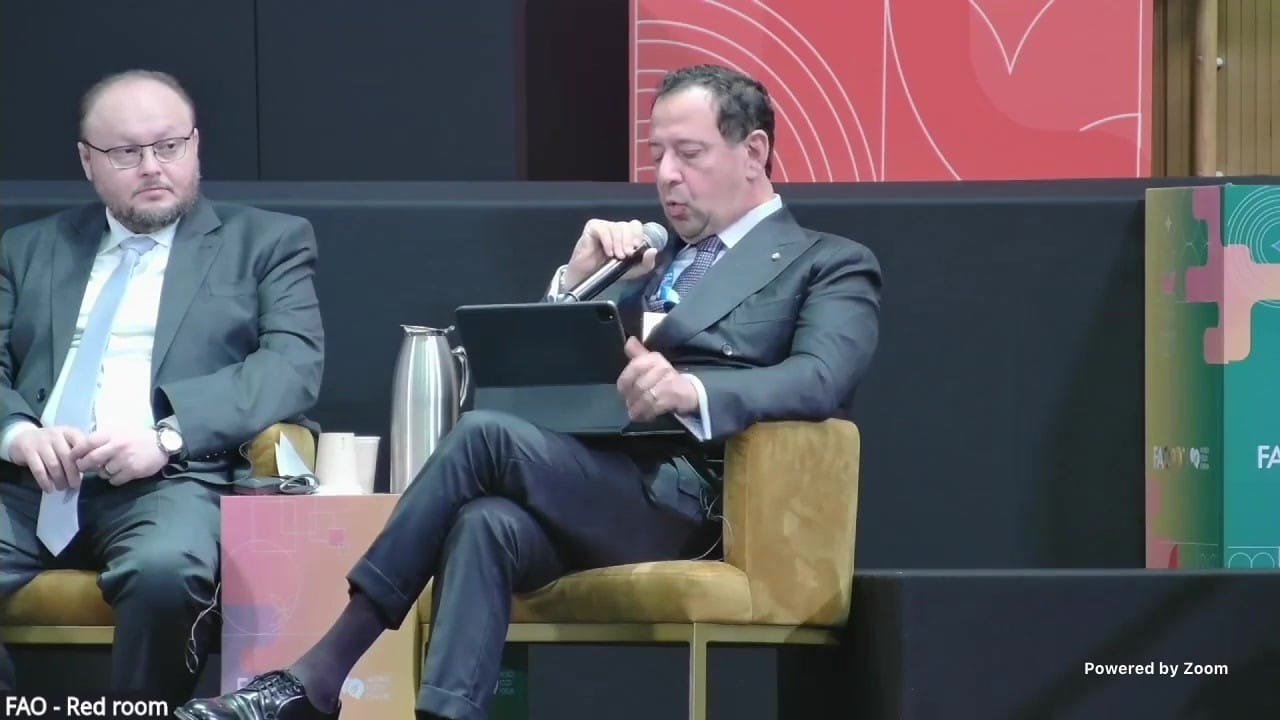
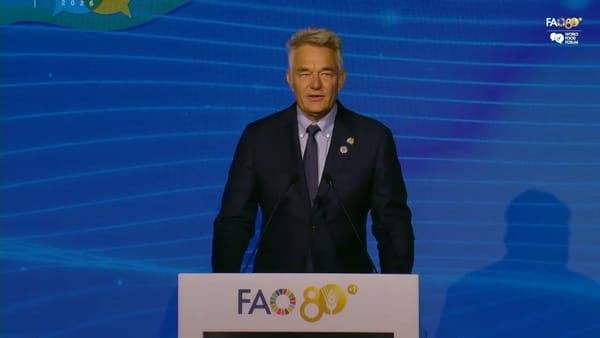
Italy. Marco Rago, Special Envoy for International Water Policy at the Ministry of Foreign Affairs, said drought in Italy "is no longer an exceptional event". Italy's response has three lines: governance, through a national control room on the water crisis and an extraordinary commissioner for water scarcity; infrastructure and efficiency, including irrigation modernisation under the National Recovery Plan; and new sources, with reuse of treated water and desalination "where there is no alternative". He reported that on 28 September Italy hosted the second ministerial meeting of the Union for the Mediterranean on water, which adopted a declaration with a 2030 ambition on SDG 6 and launched the Rome Initiative on Water. Its first pillar, the Rome Water Investment Flagship, is a three-year, 3-million-euro programme to make 15 water and climate resilience projects bankable. "Resilience needs plans that become projects, and projects that find financing."
Kazakhstan. Vice Minister of Water Resources and Irrigation Arsen Zhakanbayev also spoke, on water-saving technologies and support for farmers who adopt them; the English interpretation of his remarks is too poorly captured in the recording for us to report it in detail.
Who gets the water that is saved?
The session was about money, but Bechdol's caution about efficiency is a governance question. If water saved by modern irrigation is used to expand the irrigated area, total use does not fall, and downstream and less powerful users may receive less. Deciding "how water withdrawals will be governed" is a question of water tenure: who holds a right to the saved water, and who gets to decide.
That is the question CRPG's work in Indonesia keeps returning to. When irrigation systems are modernised or extended, the users who hold no permit, such as farmers drawing from canals informally or households whose wells depend on canal seepage, are the easiest to overlook. CRPG Director Mova Al'Afghani, PhD, made the point at the Dialogue's water tenure session the day before (read our report: Making invisible water users visible). The drought investment agenda and the water tenure agenda meet here: a bankable irrigation project needs to know whose water it is moving.
Later in the same session, FAO and the development banks turned to how such plans become bankable, and FAO launched its IRMA irrigation mapping tool; we report on those separately. For the restoration session of the day before, see our report on restoring degraded farmland.
A note on sources. The UN has not published a transcript of this session. Quotations and figures are taken from the session's English audio channel on UN Web TV, which carries English speakers as spoken and others through the official interpretation, transcribed automatically by CRPG with Whisper, and lightly edited for false starts; omissions are marked with an ellipsis. Remarks given in Spanish or Arabic are quoted from the interpretation. Figures are as the speakers stated them. If a UN transcript is published, the quotations will be checked against it and any change will be noted at the foot of this article. Images: ©FAO, stills from FAO's webcast of the session on UN Web TV.