'Land rights sit in one law; water rights sit in another': UNCCD backs the water tenure principles
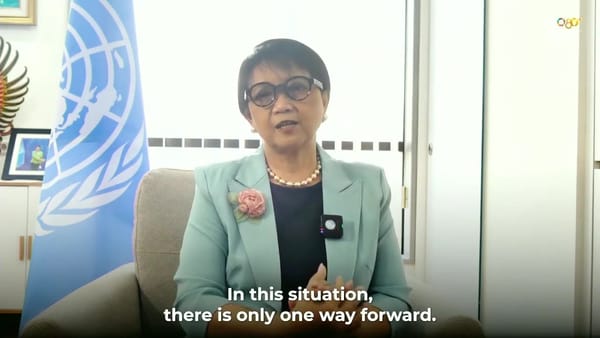
UNCCD Executive Secretary Yasmine Fouad told the high-level Rome Water Dialogue that farmers need secure access to both land and water, and that the draft water tenure principles can fill a gap the tenure guidelines left open.

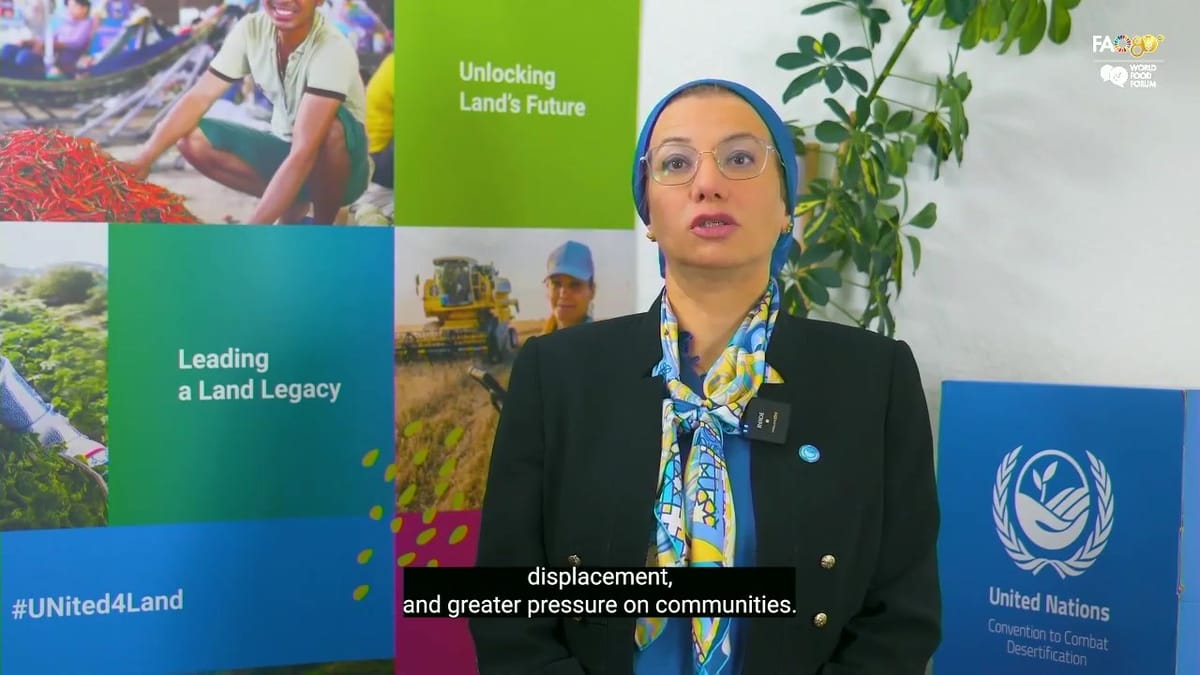
Rome, 14 October 2026. "Land and water cannot be separated. Healthy soils hold water. Healthy watersheds sustain land. When one degrades, the other follows. And so does food security. Yet we often govern them apart. Land rights sit in one law; water rights sit in another."
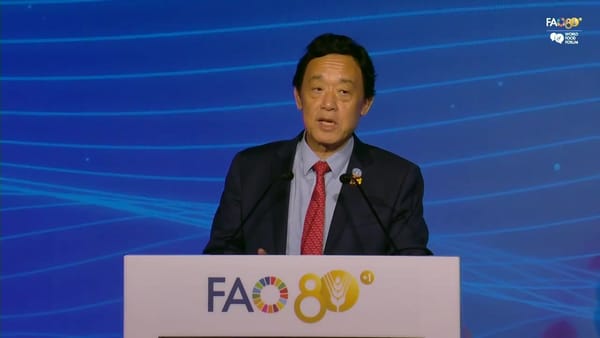
With those lines, Yasmine Fouad, Executive Secretary of the UN Convention to Combat Desertification (UNCCD), put the case for water tenure from the land side at the high-level session of the FAO Rome Water Dialogue 2026. Her video message was played in FAO's Plenary Hall during the opening, after the remarks of FAO Director-General QU Dongyu and UN Under-Secretary-General Li Junhua.
"People on the ground do not live that way"
The split between land law and water law, Fouad said, is not how rural people experience their resources. "People on the ground do not live that way. A farmer needs secure access to both land and water. Without it, there is little incentive to invest in healthier soils, restoration, or drought resilience."
Her example was pastoralists. "Grazing rights mean little without access to wells and water points along their routes. In drought, that access can mean survival. Losing it can mean the loss of livelihoods, displacement, and greater pressure on communities."
That, she said, is why the draft principles for the responsible governance of water tenure matter. She congratulated FAO and the "more than seven hundred people from ninety-two countries" who had shaped them, and pointed to three features: the principles "protect customary arrangements", "call for coherence with land", and give special attention to pastoralists, women, Indigenous peoples and local communities. The timing, she said, is critical: "The voluntary guidelines on the responsible governance of tenure do not cover water. These new principles can really fill the gap." The UNCCD, she said, "supports their further development and eventual consideration by the FAO Committee on Agriculture."
What the parties decided in Ulaanbaatar
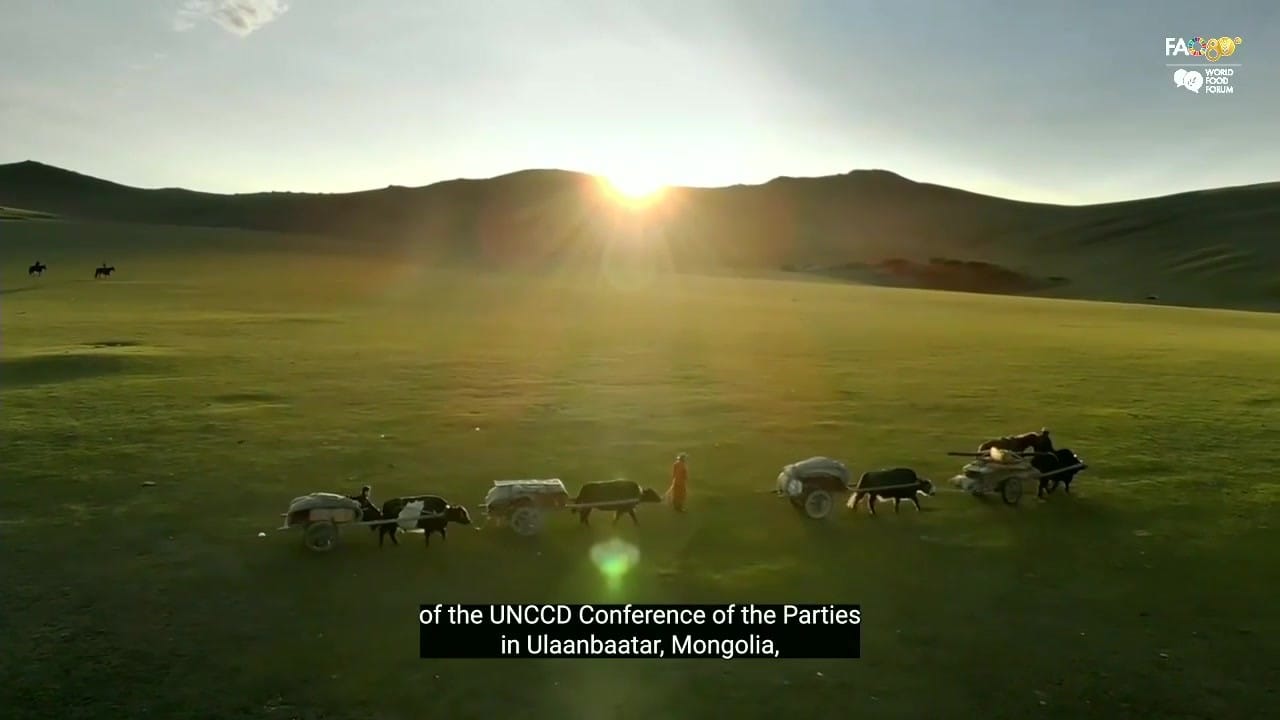
Fouad linked the principles to decisions taken at the seventeenth session of the UNCCD Conference of the Parties in Ulaanbaatar, Mongolia, in August. According to her, the parties:
- encouraged countries "to integrate customary rights to water, trees, and grazing into action on land degradation and drought";
- called for secure tenure in rangelands;
- encouraged embedding action on agricultural lands within integrated land use planning; and
- made drought a standing item on every future COP agenda.
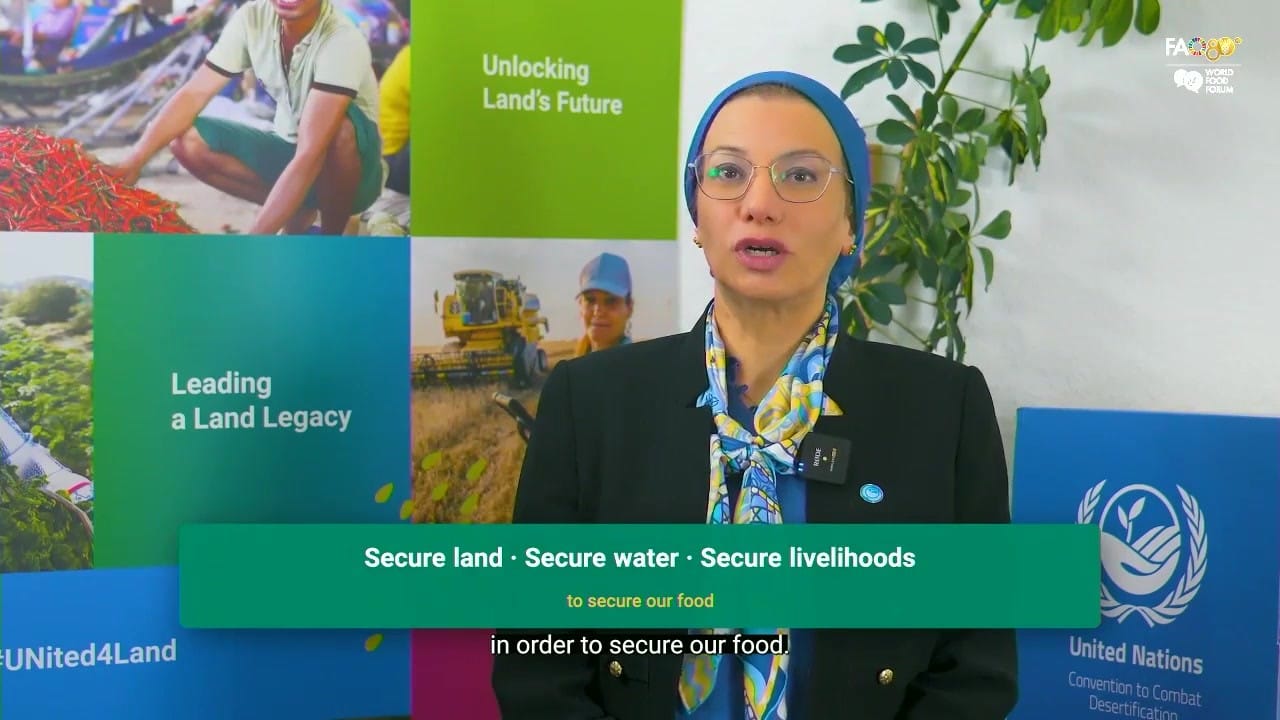
Integrated land use planning, she argued, is the practical entry point, but "today, it focused almost entirely on land, rarely on water. That needs to change. We do not need to merge legal systems. We need to plan and manage land and water together, with the people who depend on both of them." She closed with the line on the UNCCD's slide: "secure land, secure water, secure livelihoods, in order to secure our food."
The gap the principles would fill
The gap Fouad described has a history. In 2012, as FAO's Jippe Hoogeveen recalled later in the session, the Committee on World Food Security adopted the Voluntary Guidelines on the Responsible Governance of Tenure of Land, Fisheries and Forests. "Water was mentioned in these guidelines, but it was not included." The draft water tenure principles are meant to cover that ground, and their call for coherence with land tenure is what makes them relevant to the UNCCD.
Indonesia shows the problem in its own statute book. Land is governed by the Basic Agrarian Law (Law 5 of 1960) and its implementing rules; water resources by Law 17 of 2019 on Water Resources. Each has its own permits and its own agencies. Customary arrangements that bind land, forest and water together, such as those in the peatlands of Kalimantan, fall between them. CRPG Director Mova Al'Afghani, PhD, used that example at Monday's technical session on water tenure: making customary tenure in the peatlands visible, he argued, would allow peatland water to be managed much better (read our report: Making invisible water users visible). Fouad's prescription fits that case: not one merged law, but land and water planned together, with the people who use both.
For the restoration side of the same argument, see our report from the Dialogue's session on restoring degraded agricultural land. The draft principles themselves are covered in our report on Stephen Hodgson's presentation.
A note on sources. Fouad spoke in English in a recorded video message that carried on-screen subtitles. Quotations are taken from the session's English audio channel on UN Web TV, transcribed automatically by CRPG with two independent speech-recognition systems (Plaud and Whisper), and checked against the subtitles; they are lightly edited for false starts. The participant figure is as she stated it; the counts shown on FAO's slides during the week differed slightly. The UN has not yet published a transcript of this session; when it does, the quotations will be checked against it and any change will be noted at the foot of this article. Images: ©FAO, stills from FAO's webcast of the session on UN Web TV.