'Who has the strongest pump': Beth Bechdol closes the high-level Rome Water Dialogue
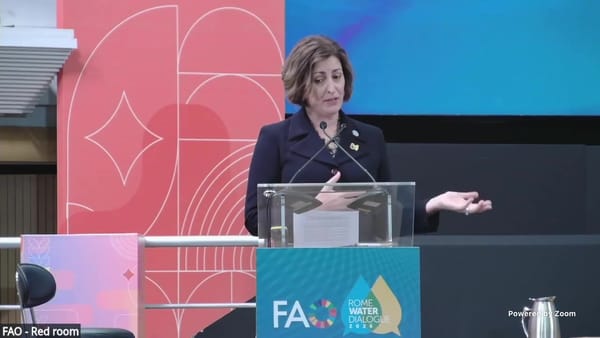
Closing the high-level session, FAO Deputy Director-General Beth Bechdol said water tenure is about who can access water and how securely, and proposed opening the next session with the farmers, Indigenous peoples and youth who spoke last.

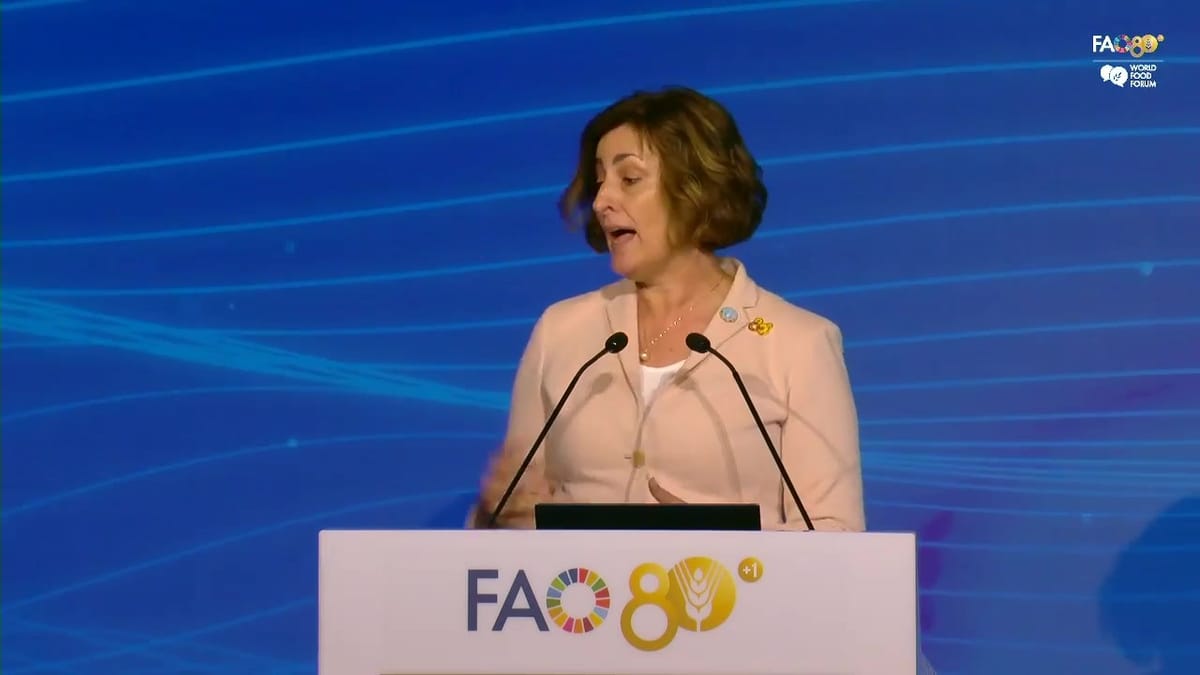
Rome, 14 October 2026. "Access can depend on who has the strongest pump, who has the closest connection, or who just has the ability to take water first." With that sentence, FAO Deputy Director-General Beth Bechdol summed up the problem that the high-level session of the FAO Rome Water Dialogue 2026 had spent three hours on. "This is what water tenure is fundamentally about: who can access the water, from which source, under what conditions, and with what degree of security."
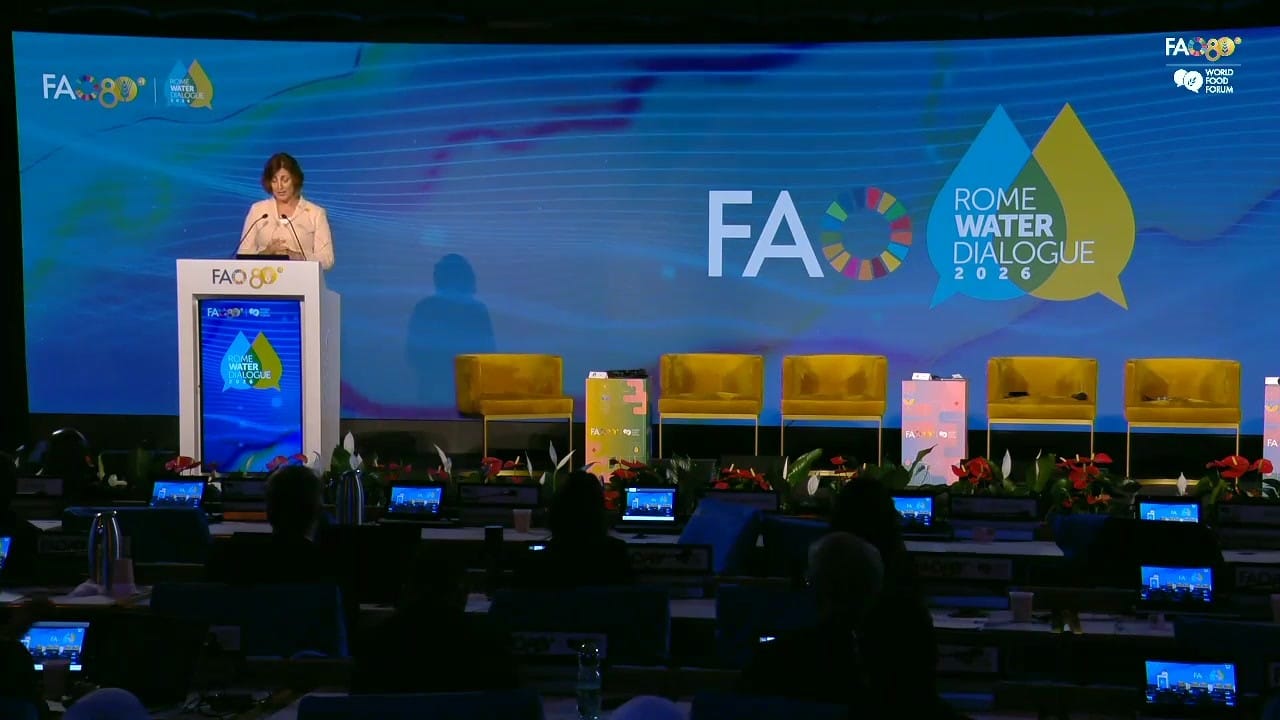
Bechdol closed the session in FAO's Plenary Hall. Her remarks are a useful record of what FAO itself took from the morning, and of one unusual suggestion about how such meetings should be run.
Decisions made every single day
She began from a reminder she credited to FAO Director-General QU Dongyu's opening: "decisions about who can use water are made every single day. In many places, however, those decisions are not guided by clear rules." Where rules are missing, the strongest pump wins. Yet water must sustain "farmers, pastoralists, fishers, and communities" while also meeting the needs of cities and industry. "So as demands grow and water becomes less predictable, countries need ways to make allocations fair, transparent, and sustainable."
The morning, she said, had brought the draft principles for the responsible governance of water tenure "closer to the realities that countries face". She drew three lessons from it:
- "sound decisions depend on knowing both what water is available and how access to it is governed";
- "these decisions cannot be made by one institution or one sector alone. Water, agriculture, land use, and environmental policies shape the same rivers, aquifers, and livelihoods, and they need to be better connected"; and
- "the people who depend on water must have a more meaningful voice in discussions that affect them."
Start with the voices
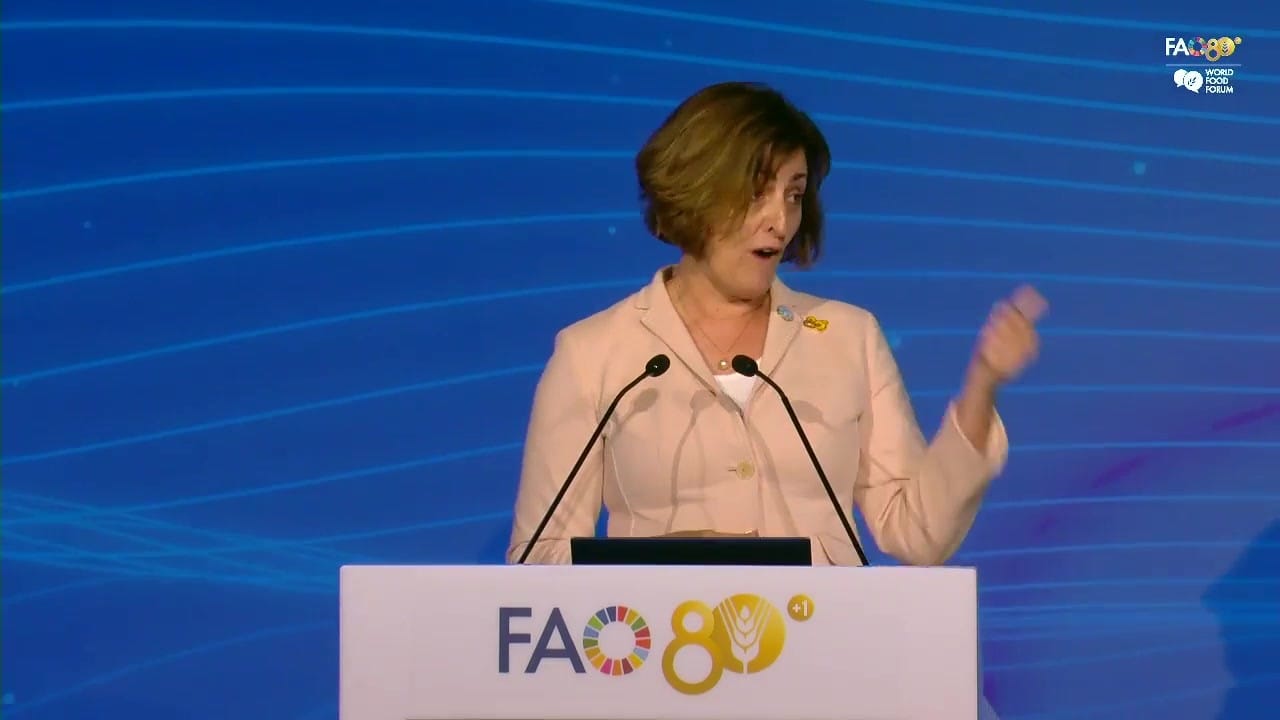
The third lesson led to her most striking remark. The stakeholder panel, with farmers, Indigenous peoples, youth, the UN Special Rapporteur and the Water Integrity Network, had been the last item before her closing, squeezed for time. Bechdol said that panel had spoken "so very clearly, so very honestly, and so very directly" that it would be hard to follow. Then she proposed changing the running order:
"I know that our protocol officers would probably not enthusiastically take up this suggestion, but for thinking of future events, perhaps we need to begin a session next time with the voices that we just heard at the end of this particular session, and let them educate, inform, and give their voices without time restrictions." Farmers, pastoralists, fishers, young people, women and Indigenous communities, she said, "are the ones whose access is often overlooked, and they need to be better included."
She also thanked the countries that had shared their experience: "We have heard from countries who are already testing these principles against their own real conditions. They have helped show where the principles can guide action and where further clarification or practical support is needed." And she encouraged members and partners to identify, "on their own terms, in their own circumstances, where this work can begin".
What Abu Dhabi should show
FAO, she said, "is ready to support these efforts", with "our technical expertise, our data, our tools, and our country support". Her test for the UN Water Conference in Abu Dhabi in December was concrete: it "should be an opportunity to show what this work has changed on the ground, how stronger evidence has led to fairer allocations and better decisions for the people who depend on water."
She closed by acknowledging agriculture's share of the problem. Agriculture "admittedly uses a very large share of this planet's freshwater resources, and our sector has a responsibility to show how water can be managed and used more effectively". "And it's water tenure that helps make this access more visible and helps make these decisions more accountable."
The strongest pump in Indonesia
Bechdol's image will be familiar to anyone who works on irrigation in Indonesia, where access often goes to whoever has the bigger pump or the better connection when rules are unclear or unenforced. Farmers have a name for those who steer water to people not entitled to it during drought: the "water mafia". CRPG Director Mova Al'Afghani, PhD, raised it at Monday's technical session on water tenure, and argued that farmers need a complaint mechanism they can actually use, and more accountability over how irrigation gates are opened and closed (read our report: Making invisible water users visible). That is the practical meaning of Bechdol's last sentence: making access visible, and decisions accountable.
The voices Bechdol wanted at the start of the next session are covered in our reports on farmer, Indigenous and youth representatives, on Pedro Arrojo and on Barbara Schreiner. The Director-General's opening is in our report on the opening.
A note on sources. Bechdol spoke in English. Quotations are taken from the session's English audio channel on UN Web TV, transcribed automatically by CRPG with two independent speech-recognition systems (Plaud and Whisper) and compared line by line, and lightly edited for false starts. The UN has not yet published a transcript of this session; when it does, the quotations will be checked against it and any change will be noted at the foot of this article. Images: ©FAO, stills from FAO's webcast of the session on UN Web TV, each matched to the timestamp of the words it accompanies.