'Farmers are not victims': Indigenous, youth and farmer voices on water tenure at the Rome Water Dialogue
On the stakeholder panel of the high-level Rome Water Dialogue, Dionicio Canahui, Alina Mubashir and Daniel Mwendah M'Mailutha asked for recognition, real influence over decisions, and finance that reaches the farm gate.

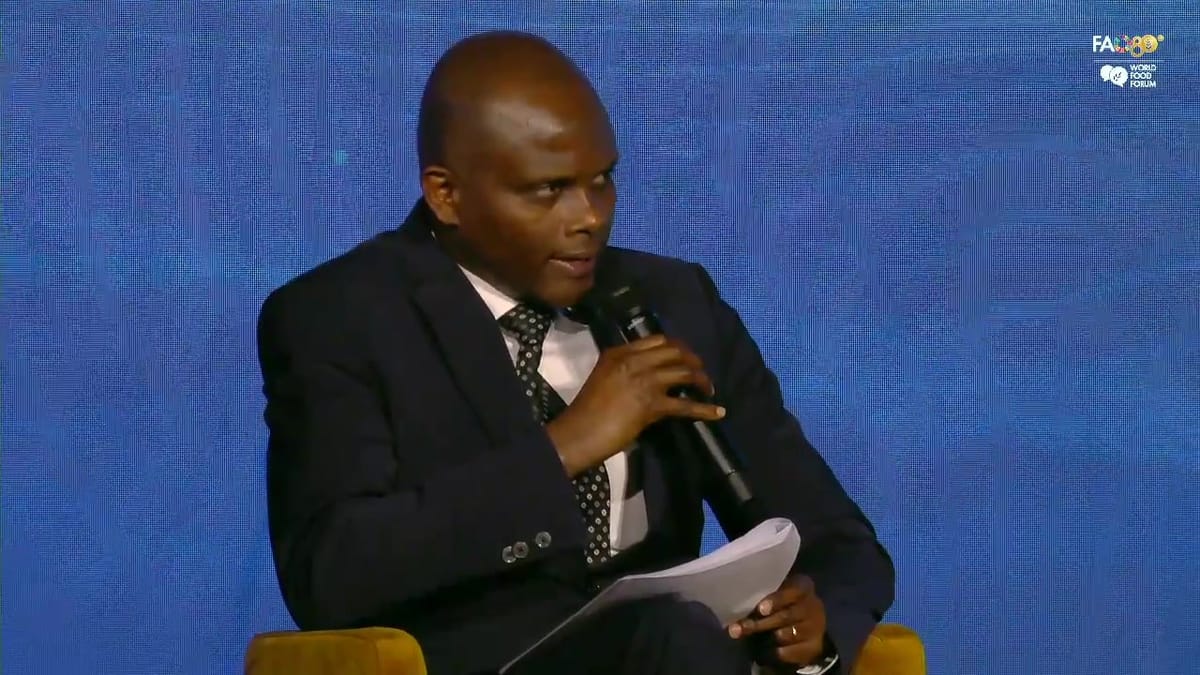
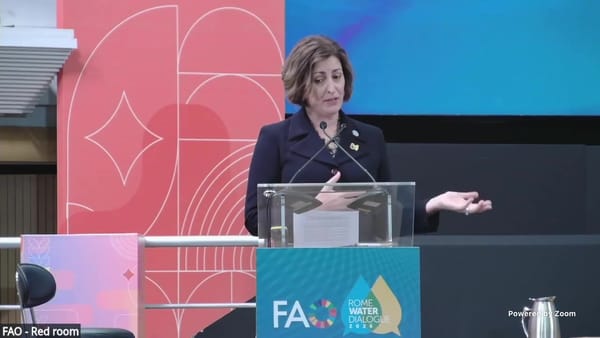
Rome, 14 October 2026. "Farmers are not victims or poor people waiting to be helped. They are economic actors. They make rational economic decisions." Daniel Mwendah M'Mailutha, President of the World Farmers' Organisation, gave the high-level session of the FAO Rome Water Dialogue 2026 one of its plainest correctives. He sat on the stakeholder panel that closed the morning, alongside an Indigenous peoples' representative and a youth leader. All three asked the same thing of the draft principles for the responsible governance of water tenure: that the people who hold water under customary, collective or informal arrangements should shape how the principles are used, and not only be consulted on them.
The panel was moderated by Nora Berrahmouni, Deputy Director of FAO's Land and Water Division. It also included the UN Special Rapporteur Pedro Arrojo and Barbara Schreiner of the Water Integrity Network, whose contributions we have reported separately. This article covers the other three voices.
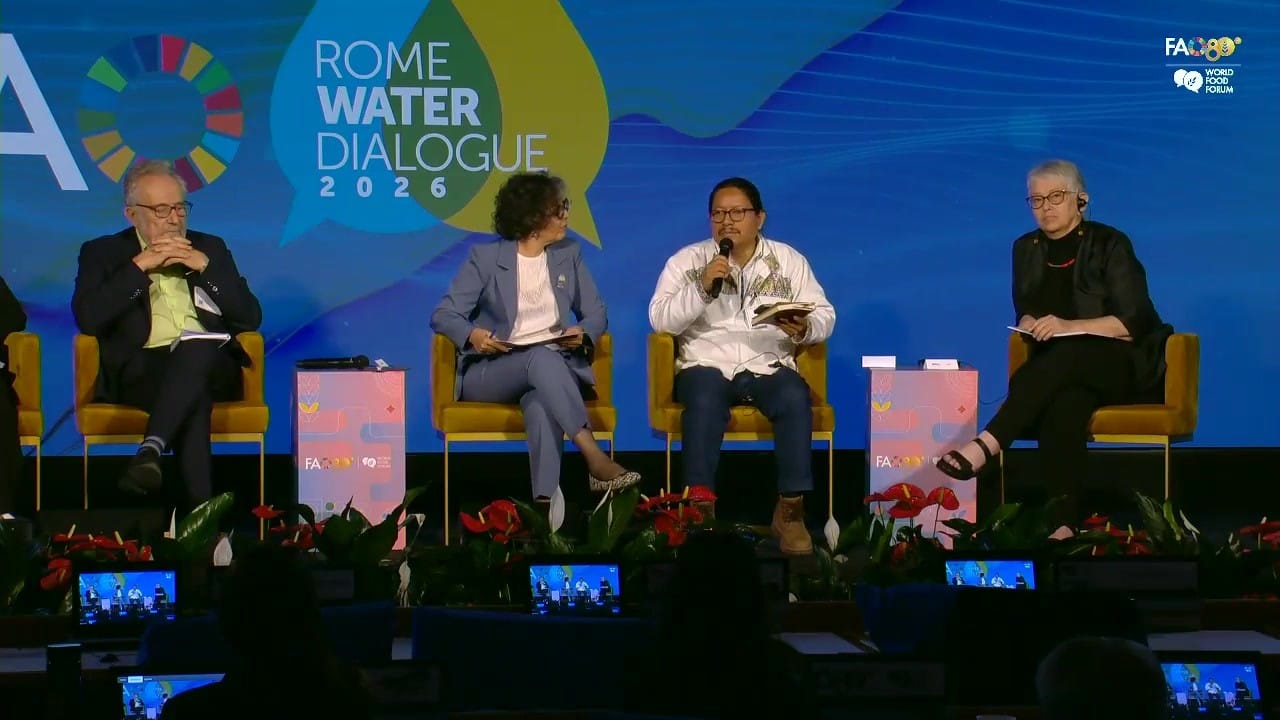
"The first challenge is the political will of governments"
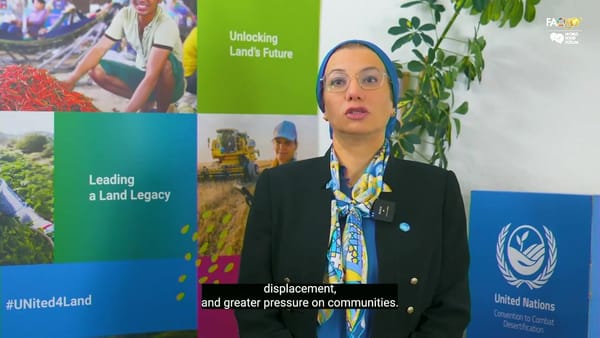
Dionicio Canahui, Food Sovereignty Program Coordinator at the International Planning Committee for Food Sovereignty, was asked what challenges and opportunities exist for water governance to recognise customary water tenure, from the experience of Indigenous peoples. Speaking in Spanish, he answered without diplomatic padding. "The first challenge is the political will of governments. They need to recognize in their public policies and laws and regulations the diversity of governance that indigenous peoples have in their territories."
Without that, he said, Indigenous systems of governance and knowledge "are going to be out there in the territories, but they will never have visibility in the public policies of governments." He named the obstacle as "this ethnocentric, racist, and colonialist vision expressed in public policies", and its root as colonialism, "this constant practice of eliminating territories and land and the ownership of the indigenous peoples, imposing visions from the top."
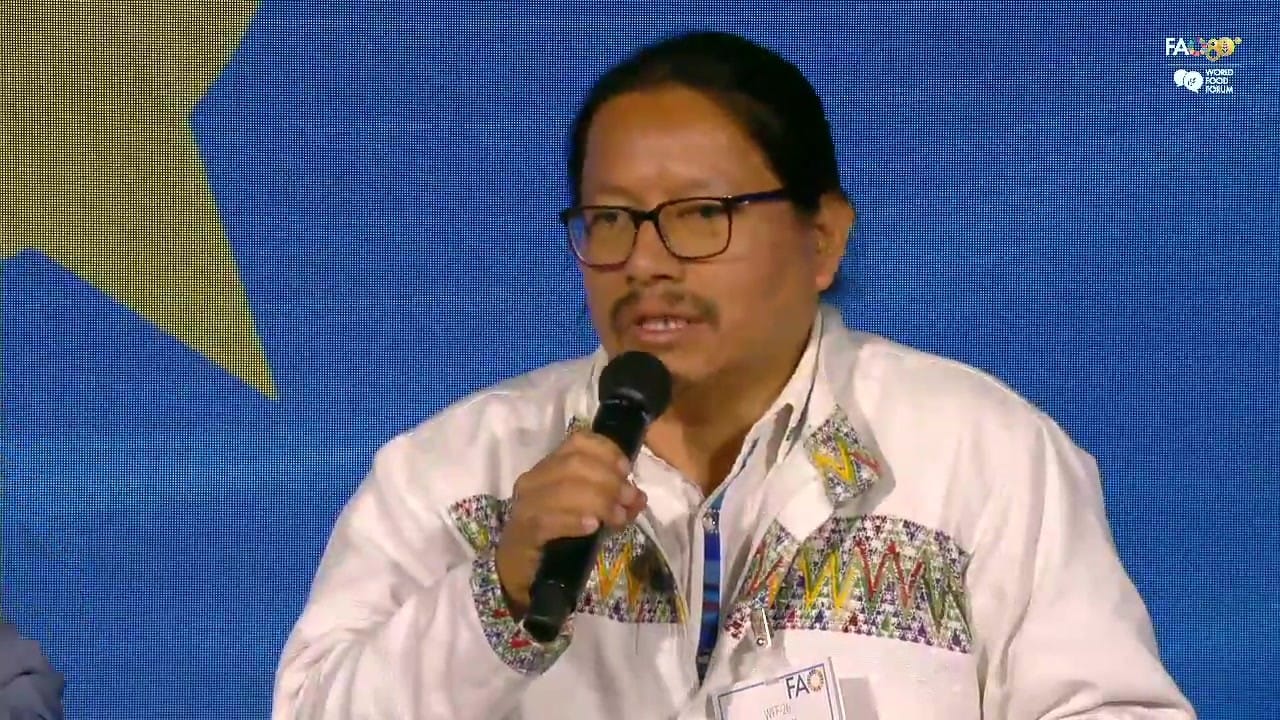
His message to the UN Water Conference in Abu Dhabi was one sentence: "May there be a clear commitment to fulfil and guarantee the rights of indigenous peoples based on the UN Declaration on the Rights of Indigenous Peoples."
"Participation must translate into influence"
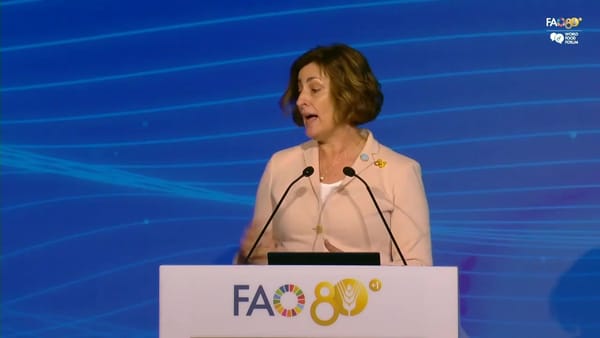
Alina Mubashir, a member of the World Food Forum's Youth Policy Board for Asia and the Pacific and co-chair of the Global Youth Constituency for Fisheries and Aquaculture, was asked how the draft could be improved. She began by crediting FAO's Land and Water Division for bringing young people in early: "you not only invited youth in the end when the decisions have already been made, but you have brought us to the conversation when it comes to the conception of these particular principles."
The principles, she said, "already hold a lot of substance and weight." What matters is "how these principles can be experienced by the people that are intended to live within them." She proposed three ways to carry them into practice:
- "Implementation must be grounded in local realities. Alongside formal records, water accounting, and technical evidence, we must recognize customary arrangements, seasonal livelihoods, and knowledge developed through generations of living with local environments."
- "Participation must translate into influence": the task now is to strengthen how farmers, fisherfolk, women, Indigenous peoples and young people "contribute to the decisions affecting them and how their perspectives are carried through into implementation."
- Strengthen the relationship between policy and practice, so that practice in turn shapes policy.
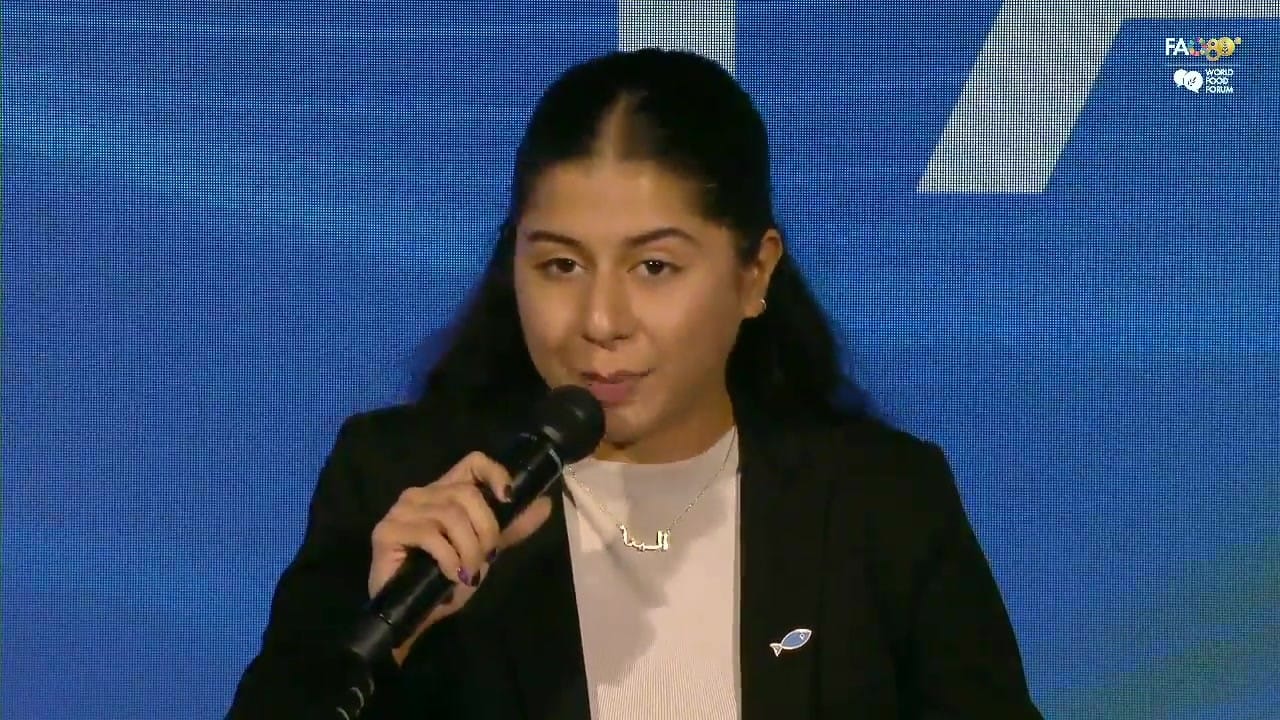
Her one-word message to Abu Dhabi was "recognition", "because responsible water tenure begins with recognizing people's rights, local knowledge, customary practices, and lived experiences, and ensuring that they reflect in how water is actually governed on the ground."
"Finance must reach the farm gate"
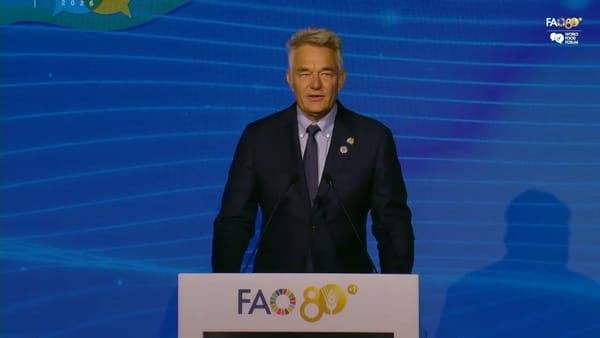
Mwendah, recently elected President of the World Farmers' Organisation, was asked what governments, the international community and farmers themselves can do to secure equitable access to water. He started with governance: "without governance of such an important resource, then everything crumbles. So governance and then investments ... before the investments are targeted, we must get the governance right."
His second point was aimed at development banks and donors: "International finance must reach the farm gate." Funds coming into the sector, he said, "should first reach the farmers", through farmer groups and water resource users' associations at the grassroots, national farmer organisations, and the World Farmers' Organisation globally, "because let's remember that farmers learn best from other farmers." Then came the line on farmers as economic actors, and the case for treating them that way: it is what "will go towards building the sustainability of what farmers do."
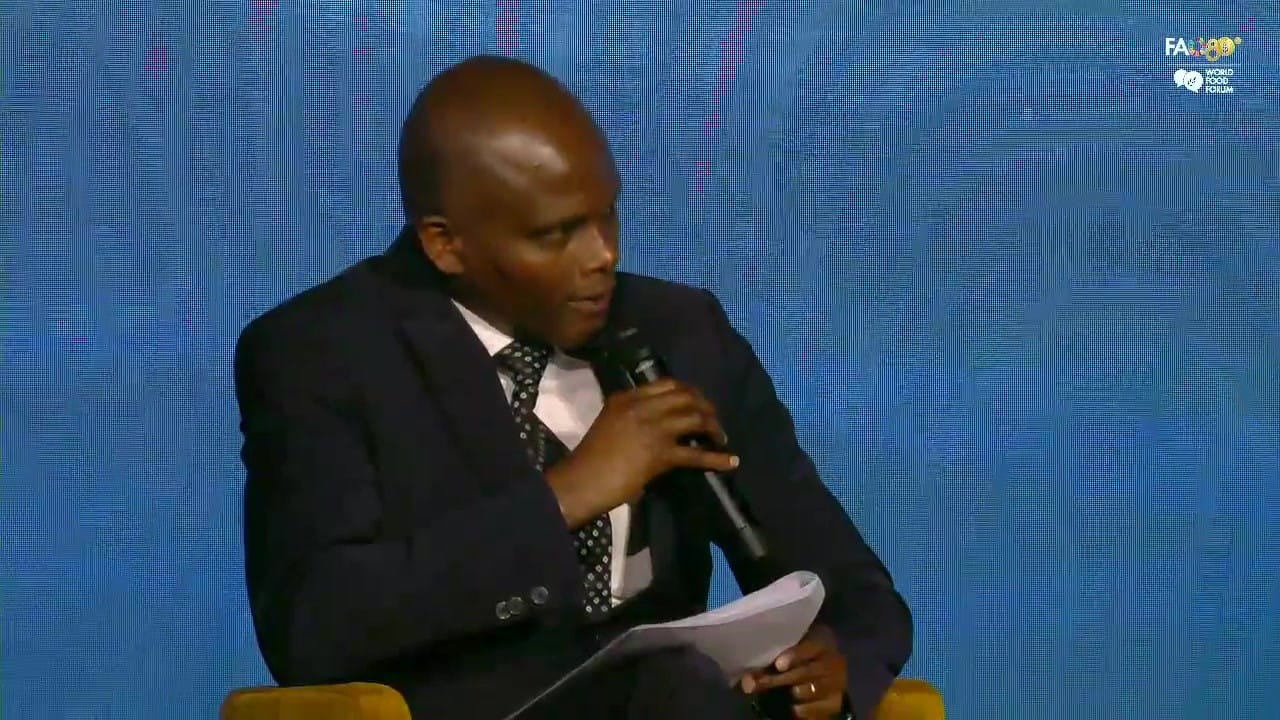
For the UN Water Conference, his message was that "farmers are in the front line of water management", the first to be hurt "when something about water goes wrong". "So let's empower farmers to hold governments and everyone else to account as far as water tenure, water use, water resources are concerned," by investing in farmer organisations "from the grassroots to the national, to the global".
Three voices, one demand
Recognition was the common thread. Canahui asked for it in law and policy; Mubashir named it as the starting point; Mwendah asked for farmers to be recognised as managers and economic actors, not beneficiaries. Each also asked for more than recognition: a share in the decisions, and in the money.
The same demand runs through CRPG's work in Indonesia. Customary water arrangements, community-run water supply and farmers' own irrigation groups are often invisible to the permit system, and so have no standing when water is allocated or when complaints are made. CRPG Director Mova Al'Afghani, PhD, made that case at Monday's technical session, choosing recognition and protection as the one principle to highlight (read our report: Making invisible water users visible). On the same stakeholder panel, Pedro Arrojo asked governments not to keep the draft "in your drawer" (our report) and Barbara Schreiner called for transparency and real participation (our report).
A note on sources. Mubashir and Mwendah spoke in English; Canahui spoke in Spanish, and his words are quoted from the official English interpretation. Quotations are taken from the session's English audio channel on UN Web TV, transcribed automatically by CRPG with two independent speech-recognition systems (Plaud and Whisper) and compared line by line, and lightly edited for false starts; omissions are marked with an ellipsis. The UN has not yet published a transcript of this session; when it does, the quotations will be checked against it and any change will be noted at the foot of this article. Images: ©FAO, stills from FAO's webcast of the session on UN Web TV, each matched to the timestamp of the words it accompanies.